


The United States and the Democratic Republic of the Congo have agreed to accelerate cooperation on critical minerals, energy and transport infrastructure, as Washington seeks to deepen its economic influence in one of Africa’s most resource-rich countries.
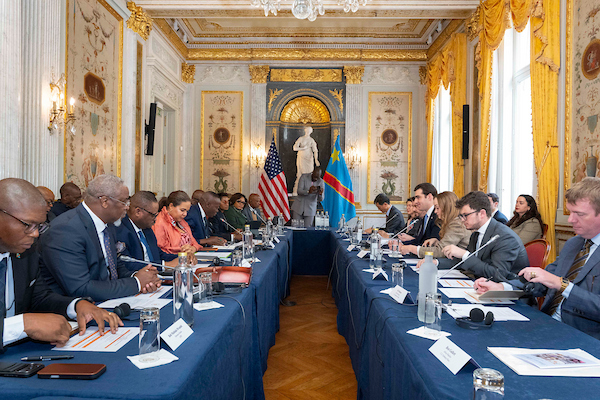
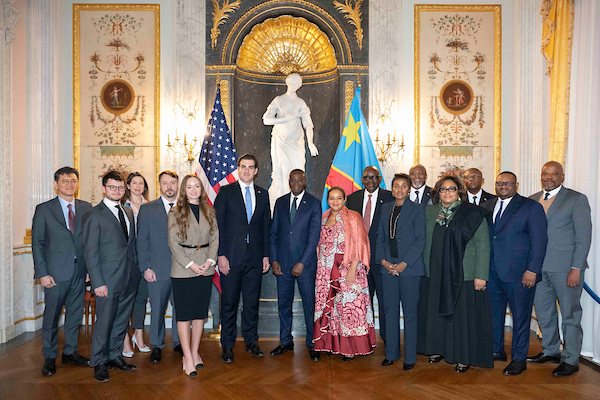
Representatives of both governments met in Paris for the second meeting of the Joint Steering Committee overseeing their Strategic Partnership Agreement, according to a joint statement released by the US State Department on Friday, November 6.
The discussions focused on attracting American private investment, advancing major infrastructure projects and strengthening supply chains, while ensuring that the DRC benefits from greater industrial development and job creation.
The meeting comes as the US seeks to expand its access to strategically important minerals and diversify supply chains that underpin the global energy transition and advanced manufacturing.
The DRC is a major global producer of cobalt and copper, two minerals essential to electric vehicles, batteries and industrial technologies. Its substantial mineral reserves have made the country increasingly important to competition among global economic powers for access to critical raw materials.
US investment interest gathers momentum
The committee reviewed progress since its inaugural meeting in February 2026 and welcomed growing interest from American private companies in the Strategic Asset Reserve, an initiative covered by the bilateral agreement.
The US International Development Finance Corporation (DFC), Washington’s development finance institution, also briefed officials on its expanding pipeline of potential investments in the DRC.
Although the statement did not disclose the value of prospective investments or identify participating companies, the discussions signalled an effort to move the partnership beyond diplomatic commitments towards commercially viable projects.
Both governments emphasised the importance of establishing clear responsibilities, implementation schedules and measurable outcomes, supported by coordination between ministries, government agencies and technical institutions.
Lobito Corridor and Grand Inga take centre stage
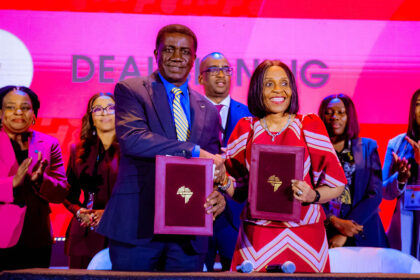
Infrastructure development featured prominently in the discussions, with both governments welcoming the signing of a concession agreement for the Lobito Corridor.
The transport corridor, which links mineral-producing regions of the DRC and Zambia to Angola’s Atlantic coast, is regarded as a strategic route for improving regional trade and reducing logistical bottlenecks affecting mineral exports.
Its development could strengthen the competitiveness of Central and Southern African mineral producers by improving access to international markets and supporting cross-border investment.
The delegations also examined the next steps for the Grand Inga hydropower project, one of Africa’s most ambitious proposed energy developments.
Located on the Congo River, the project has long been viewed as a potential source of large-scale electricity generation capable of supporting industrialisation across the DRC and neighbouring economies.
However, its development has faced persistent challenges involving financing, infrastructure requirements and implementation.
For American investors, progress on Grand Inga could create opportunities in power generation, electricity transmission and energy-intensive industries, including mineral processing.
The two governments also explored opportunities for US companies in critical minerals processing, exports and the broader energy sector.
Expanding domestic mineral processing could allow the DRC to capture more value from its natural resources rather than relying predominantly on exports of unprocessed or partially processed commodities.
Tax reforms aim to attract long-term capital
The committee welcomed the DRC’s recent adoption of legislation establishing tax and customs rules for projects developed under the Strategic Partnership Agreement.
The measures are intended to provide greater regulatory clarity for investors and support the implementation of designated strategic projects.
Both governments stressed that predictable policies and transparent investment frameworks would be essential to attracting and retaining long-term private capital.
They also highlighted the need to ensure that investment translates into tangible economic benefits for Congolese citizens through employment, technical training and the development of domestic businesses.
For Kinshasa, the challenge will be to convert the country’s substantial mineral wealth into broader economic development while addressing infrastructure deficits and improving the investment climate.
For Washington, the partnership offers an opportunity to strengthen commercial ties with a strategically important African economy while supporting alternative supply chains for minerals critical to US industries.
Security remains central to investment ambitions
The delegations reaffirmed that peace and security remain fundamental to achieving the partnership’s economic objectives.
The emphasis reflects the continuing security challenges facing eastern DRC, where armed conflict and regional tensions have complicated economic development and investment.
Political stability and improved security conditions will be important to the success of infrastructure projects, industrial investment and cross-border trade initiatives.
The committee also called on eligible private companies to explore opportunities arising from the agreement and engage with the relevant authorities as implementation progresses.
Both governments said their objective was to turn the strategic partnership into sustained investment capable of creating jobs, strengthening supply chains and generating economic benefits for American and Congolese businesses.
The latest meeting underscores the growing importance of the DRC in Washington’s Africa economic strategy, particularly as access to critical minerals, reliable energy and transport infrastructure becomes increasingly central to global industrial competition.
However, the partnership’s longer-term impact will depend on whether the governments can translate their commitments into financed projects, operational infrastructure and measurable improvements in the Congolese economy.
SUPPORT AFRICAN BUSINESS JOURNALISM
Help XOL Africa expand independent business reporting across Africa.
SUPPORT XOL AFRICA →