


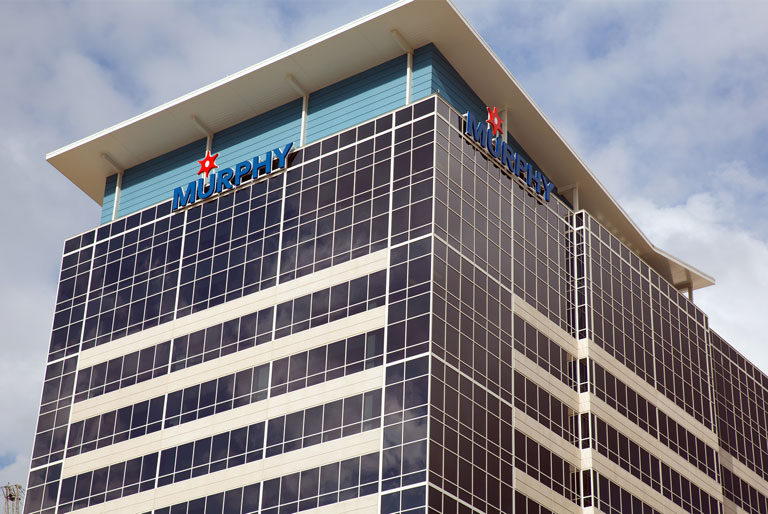
Murphy Oil Corporation has signed two production sharing contracts covering approximately 3.1mn acres offshore Mauritania, expanding the US energy company’s exploration interests in west Africa as it seeks new opportunities for oil and gas development.
In a statement released on Wednesday, November 4, the Houston-based company said the agreements covered the C-10 and Tiof blocks, with Murphy securing a 90 per cent working interest and operatorship through its subsidiaries.
Mauritania’s state-owned energy company, Société Mauritanienne des Hydrocarbures (SMH), will retain the remaining 10 per cent as a carried working interest.
The agreements give Murphy control over exploration activities across the two offshore blocks, while providing the Mauritanian government with a stake in any potential future discoveries.
Murphy and SMH will now undertake further technical evaluations to assess the blocks’ exploration potential before determining subsequent investment and drilling activities.
The company did not disclose the financial terms of the contracts, planned exploration expenditure or a timetable for drilling.
The agreements represent an expansion of Murphy’s African offshore interests, adding Mauritania to a portfolio that already includes exploration and development activities in Côte d’Ivoire.
Mauritania strengthens offshore energy ambitions
The contracts come as Mauritania seeks to develop its offshore hydrocarbon resources and attract international investment into its energy sector.
The west African country has emerged as an increasingly important destination for offshore energy investment, supported by discoveries in the wider Mauritania-Senegal maritime basin.
The development of offshore gas resources has raised expectations that the country could strengthen its position as an energy producer and attract further investment in exploration, infrastructure and related services.
Murphy’s entry into the C-10 and Tiof blocks adds another international operator to Mauritania’s upstream petroleum sector.
Production sharing contracts typically establish the framework under which companies undertake exploration and development activities, with the state receiving an agreed share of production if commercially viable resources are discovered and developed.
Under the arrangements announced by Murphy, SMH’s carried interest provides the Mauritanian state company with a 10 per cent participating stake, although the precise funding obligations and cost-recovery provisions were not disclosed.
The approximately 3.1mn-acre contract area, equivalent to about 12,545 square kilometres, gives Murphy a substantial offshore exploration position.
However, the agreements remain at an early stage, and their commercial significance will depend on geological assessments, potential discoveries and the economics of any future development.
Murphy expands African exploration footprint
Murphy’s latest agreements form part of its strategy to maintain a diversified portfolio of oil and natural gas assets across established producing regions and frontier exploration markets.
The company operates onshore assets in the Eagle Ford Shale in the United States and the Tupper Montney and Kaybob Duvernay formations in Canada.
Its offshore interests include operations in the US Gulf of Mexico and Canada, alongside exploration and development opportunities in Vietnam and Côte d’Ivoire.
The addition of Mauritania provides Murphy with further exposure to offshore exploration in west Africa, a region where international energy companies continue to assess prospects for commercially viable oil and gas discoveries.
For Mauritania, attracting operators with offshore technical expertise and access to capital is important to expanding exploration activity and identifying resources that could support future government revenues.
Nevertheless, offshore exploration remains capital-intensive and carries substantial geological, operational and commercial risks.
Companies must undertake seismic interpretation, geological studies and potentially expensive exploratory drilling before determining whether discoveries can be developed profitably.
The contracts therefore do not represent an immediate commitment to oil or gas production.
Investment prospects depend on exploration results
Murphy said it would work with SMH to evaluate the potential of the C-10 and Tiof blocks, but provided no details on prospective resources or expected production volumes.
The absence of disclosed drilling commitments or capital expenditure plans indicates that the next phase will focus on assessing the geological and commercial prospects of the acreage.
Any future development would depend on exploration results, regulatory approvals, infrastructure requirements and prevailing oil and gas market conditions.
The agreements nevertheless underline Mauritania’s efforts to broaden participation in its offshore energy industry and secure international partners capable of undertaking complex exploration projects.
For Murphy, the contracts offer access to a sizeable new exploration area while extending its presence in Africa’s offshore petroleum sector.
Whether the investment ultimately translates into commercial discoveries will depend on the outcome of the technical assessments now planned by Murphy and its Mauritanian partner.
SUPPORT AFRICAN BUSINESS JOURNALISM
Help XOL Africa expand independent business reporting across Africa.
SUPPORT XOL AFRICA →