




CAPE TOWN, South Africa (XOL Africa) — Namibia has launched what project partners describe as Africa’s first fully integrated green hydrogen facility, combining solar power generation, hydrogen production and energy storage at a single site in Walvis Bay.
The CMB.TECH Namibia facility is designed to produce renewable hydrogen for local industrial applications while providing a platform for future expansion into maritime fuels and other exports.
“Africa’s first fully integrated green hydrogen facility demonstrates that large-scale clean energy production is not a future ambition, but a present-day reality,” said Sabine Dall’Omo, CEO of Siemens Sub-Saharan Africa.
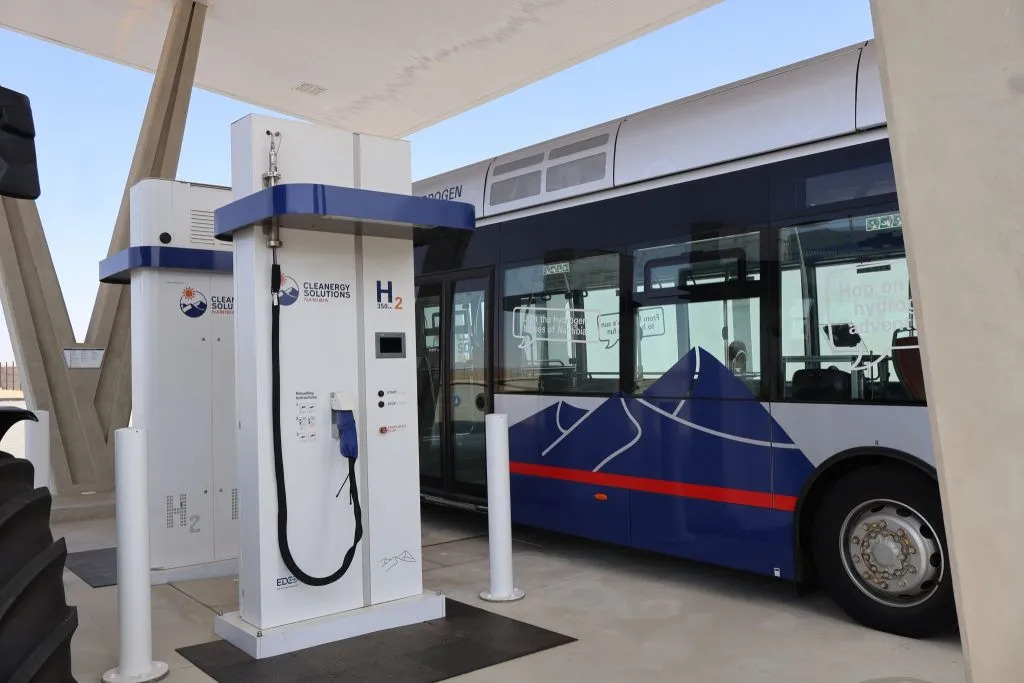
The facility uses solar power to run an electrolyzer that splits water into hydrogen and oxygen. The hydrogen initially will be used for applications including dual-fuel trucks, generators and Namibia’s first hydrogen-powered freight locomotive.
The project could eventually support maritime decarbonization by producing ammonia from green hydrogen for use as a marine fuel.
Namibia has abundant solar resources, with the country receiving about 300 sunny days a year. At the Walvis Bay site, a 5-megawatt-peak solar park covering 6.5 hectares supplies a 5-megawatt proton exchange membrane electrolyzer and a 5.9-megawatt-hour battery energy storage system.
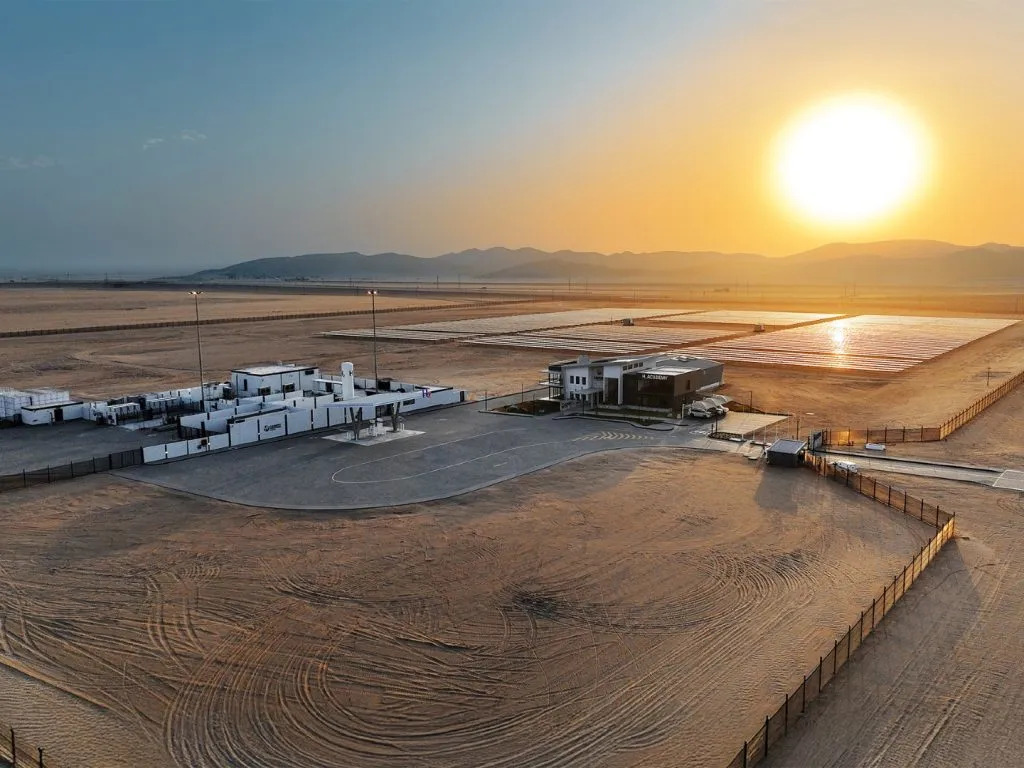
The electrolyzer operates off-grid, using electricity generated by the solar park and stored in the battery system.
CMB.TECH built the facility and is using the hydrogen itself for its initial industrial applications, providing an immediate customer for the fuel.
“Many green hydrogen projects are stalling because, while they invest heavily in solar energy and green hydrogen production, there is often no commercial offtake agreement in place to secure demand for the hydrogen produced,” Dall’Omo said.
Siemens is providing the electrical, automation and safety systems supporting the facility. Dall’Omo said integrating the technologies was critical to ensuring reliable operations.
“In a region where reliable energy is essential for economic growth and social development, what matters most is a system that simply works,” she said.
Roy Campe, chief technology officer at CMB.TECH, described the facility as a “Living Lab” for an integrated hydrogen economy. It includes a solar-powered electrolyzer, a hydrogen refueling station for vehicles and industrial uses, and an on-site Hydrogen Academy for training workers.
The project also places emphasis on developing local skills. Twenty-four of the facility’s 25 employees are Namibian and received training through the Hydrogen Academy, according to the project partners.
“By partnering with local universities and institutions like the Namibia Institute for Mining Technology, the project is training a new generation of engineers and technicians,” said Johannes Shimbilinga, municipal mayor of Walvis Bay.
He said the effort could help Namibia develop expertise to operate and maintain a domestic hydrogen industry and eventually export technical knowledge as well as green hydrogen.
Wiebke Polomka, senior manager for Southern Africa at Afrika-Verein der deutschen Wirtschaft, said the project could demonstrate how hydrogen can help decarbonize transportation and logistics.
“Beyond its role as an energy production facility, the project illustrates how green hydrogen can accelerate the decarbonisation of transport and logistics value chains,” Polomka said.
The facility’s current solar installation occupies only a portion of the available land. CMB.TECH plans to expand the solar capacity significantly.
“The next step is to increase capacity to 250MW, then to 500,” Campe said. “We want to turn Namibia into a global energy hub and export energy to Europe and the rest of the world.”
The current solar park has 7,000 panels, Campe said, adding that future expansion could involve millions of panels.
Dall’Omo said the project’s broader significance lies in collaboration among developers, technology companies and industrial partners.
“The project underscores the importance of ecosystem-led execution in delivering complex energy transitions,” she said. “It demonstrates how strategic collaboration can unlock sustainable industrial growth and long-term economic resilience.”
SUPPORT AFRICAN BUSINESS JOURNALISM
Help XOL Africa expand independent business reporting across Africa.
SUPPORT XOL AFRICA →