


Cambodia is seeking to extend its digital payments infrastructure into Africa, announcing plans to connect its Bakong platform with Rwanda’s national payment network as part of a broader push to strengthen financial links between emerging economies.
The initiative, announced on Sunday at the inaugural Black Swan Summit Cambodia in Phnom Penh, forms part of a series of agreements and pilot projects involving African financial institutions, Japanese technology groups and international payment networks.
According to a statement issued on November 15 by the Singapore-headquartered Global Finance & Technology Network (GFTN), Cambodia’s central bank is working with the National Bank of Rwanda to establish a cross-border remittance corridor linking Bakong with Rwanda’s RSwitch payment infrastructure.
The proposed arrangement would initially facilitate transfers from Cambodia to Rwanda, potentially reducing dependence on conventional correspondent banking networks and creating a foundation for broader financial connectivity between Southeast Asia and Africa.
The project remains under development, with neither central bank announcing a launch date, transaction fees or expected transfer volumes.
The initiative comes as African policymakers seek to lower the cost of cross-border payments, improve financial inclusion and strengthen regional trade through interoperable digital infrastructure.
Africa’s fragmented payment systems, differing regulatory requirements and reliance on international settlement networks have long complicated transactions between countries, particularly for smaller businesses and individuals sending remittances.
Cambodia’s proposed partnership with Rwanda could offer an alternative model based on direct connections between national payment platforms.
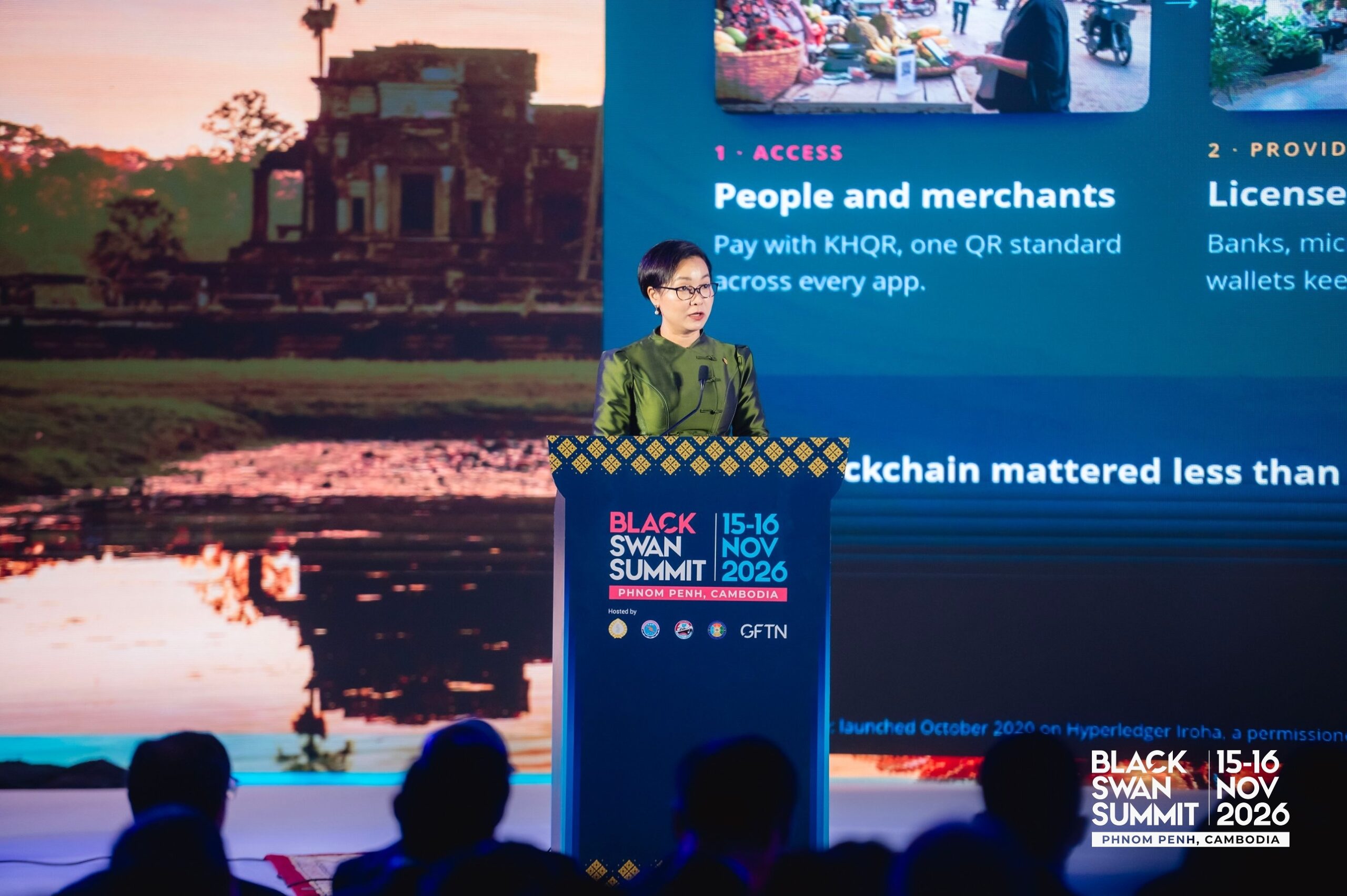
Chea Serey, governor of the National Bank of Cambodia, said the country’s experience rebuilding its financial system demonstrated the potential for emerging economies to develop infrastructure suited to their own economic circumstances.
“Cambodia knows what it means to lose a financial system and rebuild trust in money. Bakong has expanded access and the use of the riel. Now we are connecting it to the world,” she said.
“Sovereignty and openness are not opposites. Inclusion must be measured not just by whether people can pay, but by whether they can withstand shocks.”
Expanding into Francophone Africa
Beyond Rwanda, Cambodia is exploring connections between Bakong and payment systems in Francophone African economies, with remittances and small-value commercial transactions identified as potential initial applications.
The discussions coincide with the Sommet de la Francophonie, providing a diplomatic setting for closer financial cooperation between Southeast Asian and African countries.
Although the proposed connections remain exploratory, they could eventually support businesses engaged in trade between the two regions, where payment costs, currency conversion and settlement delays can present obstacles.
For African economies, the attraction of such arrangements lies in the possibility of developing direct financial corridors that reduce reliance on intermediary institutions.
However, their commercial viability will depend on regulatory alignment, foreign exchange liquidity, transaction volumes and the ability of participating institutions to offer competitive pricing.
Rwanda has positioned itself as a regional financial technology hub, investing in digital payments and financial infrastructure as part of efforts to attract investment and expand access to financial services.
A successful connection with Bakong could provide another channel for Rwanda to strengthen its financial links beyond traditional African and European markets.
Cambodia’s digital payments expansion
Launched as a national payment infrastructure, Bakong has become central to Cambodia’s efforts to expand digital financial services and encourage greater use of the riel.
The platform connects approximately 38mn accounts in a country with a population of about 17mn, reflecting the use of multiple accounts by individuals and businesses.
In 2025, Bakong processed 1.3bn transactions valued at $241.84bn, equivalent to approximately 4.5 times Cambodia’s gross domestic product, according to figures released by the summit organisers.
The share of transactions conducted in riel increased from 17 per cent in 2020 to 58 per cent in 2025, highlighting the platform’s role in promoting the national currency in an economy historically characterised by extensive use of the US dollar.
Cambodia is now seeking to build on that domestic adoption by extending the platform internationally.
Under an initiative branded Bakong to the World, users will be able to create virtual Visa or Mastercard cards through the application, allowing them to make contactless payments overseas.
Separately, the National Bank of Cambodia and Japan’s SBI Group plan to explore stablecoin-based international remittances, with funds received through Bakong wallets.
The Cambodian central bank and SBI Bank will also pilot the tokenisation of Cambodian government bonds using the Canton Network, examining whether blockchain-based infrastructure can improve securities trading and settlement.
These initiatives remain at different stages of development and have yet to demonstrate their effectiveness at commercial scale.
Lessons for African financial integration
Cambodia’s international expansion comes amid growing efforts across Africa to connect domestic payment systems and facilitate transactions in local currencies.
The Pan-African Payment and Settlement System (PAPSS), developed under the auspices of the African Export-Import Bank and the African Union, is intended to reduce the need for African cross-border transactions to be routed through third-country currencies and financial institutions.
While Cambodia’s initiative operates independently of PAPSS, both reflect a broader shift towards payment infrastructure designed to improve settlement efficiency and reduce transaction costs.
The comparison also highlights the potential for African countries to establish financial links with other emerging markets without relying exclusively on established international banking channels.
Cambodia’s experience is particularly notable given the collapse of its financial system under the Khmer Rouge regime between 1975 and 1979, when banking institutions were dismantled and the national currency abolished.
The riel was reintroduced in March 1980, beginning a lengthy reconstruction of the country’s monetary institutions.
Its subsequent development of a digital-first payments platform offers a case study for countries seeking to expand financial access without replicating every element of conventional banking infrastructure.
Sopnendu Mohanty, group chief executive of GFTN, said emerging economies increasingly had opportunities to develop and connect financial systems according to their own priorities.
“Cambodia shows that emerging economies can build financial infrastructure around their own needs rather than inherit systems designed elsewhere,” he said.
“The next challenge is connecting these platforms internationally. From African payment links to Japanese fintech pilots, Black Swan Summit Cambodia demonstrates how emerging markets can open new channels for trade, investment and financial inclusion.”
The two-day summit, co-hosted by the National Bank of Cambodia and GFTN in collaboration with three Cambodian ministries, has attracted more than 5,000 registered participants from 60 countries, including central bankers, policymakers, investors and technology executives.
Discussions will continue on Monday, focusing on economic corridors, payment interoperability, financial resilience and regulatory cooperation.
For African economies, the significance of Cambodia’s initiative will ultimately depend on whether the proposed connections move beyond bilateral agreements and pilot projects to deliver affordable, reliable payment services for businesses and consumers.
The Rwanda corridor represents an initial test of that ambition, with the potential to demonstrate how national digital payment systems can be linked across continents to support trade and financial integration.
SUPPORT AFRICAN BUSINESS JOURNALISM
Help XOL Africa expand independent business reporting across Africa.
SUPPORT XOL AFRICA →