


Beko, the international home appliance manufacturer with production operations spanning Africa, has warned that poorly aligned climate, trade and industrial policies risk increasing manufacturing costs and undermining investment in cleaner production, as new European carbon regulations reshape global supply chains.
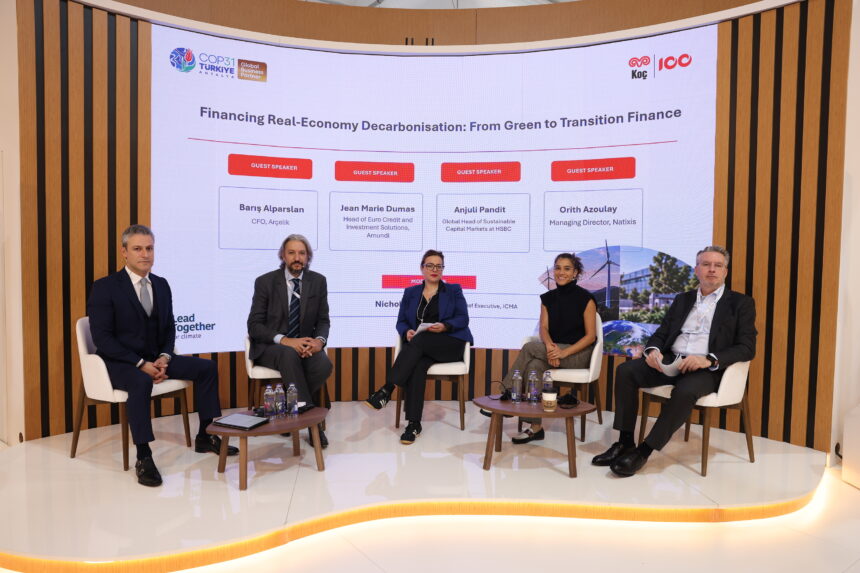
The company, which operates manufacturing facilities across Europe, Asia, Africa and the Middle East, called for closer coordination between carbon pricing, trade regulations and industrial financing during discussions at the COP31 climate summit in Antalya, Türkiye.
In a statement issued on November 14, Beko said manufacturers operating across multiple markets faced increasing pressure from overlapping climate obligations, trade restrictions and industrial policies, potentially reducing the capital available for decarbonisation.
The concerns have implications for African manufacturing economies seeking to expand industrial production while maintaining access to international markets, particularly the European Union.
The EU’s Carbon Border Adjustment Mechanism (CBAM), which entered its definitive phase in January 2026, is changing the cost structure of carbon-intensive imports and influencing investment decisions across international supply chains.
Although the mechanism currently targets selected carbon-intensive goods, the European Commission has proposed extending its scope to approximately 180 downstream products containing substantial quantities of steel or aluminium, including domestic appliances, from January 2028.
The proposal has yet to be adopted.
Such an extension could increase compliance requirements for manufacturers exporting covered appliances to Europe, including producers operating in African markets.
Africa faces growing pressure from carbon regulations
For African manufacturers, Europe’s changing carbon regulations present both commercial risks and incentives to invest in cleaner production.
Companies dependent on carbon-intensive electricity, imported industrial materials or older manufacturing technologies could face higher compliance costs if their products become subject to expanded carbon border measures.
The potential impact would vary by country, industry and production process, particularly where manufacturers lack access to affordable renewable electricity or financing for modern equipment.
Beko’s African manufacturing presence gives the company an interest in how these policies affect internationally integrated production networks.
The group operates through subsidiaries in more than 55 countries and has manufacturing facilities across several regions, including Africa.
Its portfolio includes Defy, a household appliance brand with an established presence in South Africa.
Fatih Özkadı, Beko’s chief sustainability, quality and customer care officer, said governments needed to consider the combined effects of climate regulation and industrial policy rather than introducing measures independently.
“Climate, trade and industrial policies need to be designed together,” he said.
“Manufacturers like us buy steel and aluminium, make finished products in several countries and compete in global markets. When carbon pricing, CBAM and industrial measures are not aligned, the costs add up and reduce what we can invest in decarbonisation.”
Although his remarks focused particularly on manufacturing links between Türkiye and the EU, the broader concerns are relevant to African industrial exporters exposed to European trade regulations.
For countries seeking to develop domestic manufacturing industries, the challenge is to remain competitive while meeting increasingly demanding environmental standards in export markets.
The implications could be particularly significant for manufacturers of products that rely heavily on steel, aluminium and electricity, where production costs and emissions are closely linked.
Climate finance emerges as industrial priority
Beko also called for greater access to long-term financing to support investment in lower-carbon manufacturing, renewable energy, energy efficiency and supply-chain transformation.
The financing debate is particularly relevant to Africa, where manufacturers can face high borrowing costs and limited access to capital for industrial modernisation.
At COP31, the company highlighted the need to translate climate commitments into commercially viable investment projects rather than relying solely on emissions reduction targets.
The discussions took place against the backdrop of the Baku to Belém Roadmap to $1.3tn, which outlines pathways to scaling climate finance for developing countries to $1.3tn annually by 2035.
For African economies, access to such financing could influence their ability to modernise industrial facilities, reduce emissions and maintain competitiveness in international markets.
Barış Alparslan, Beko’s chief financial officer, said the transition to cleaner manufacturing required financing arrangements that reflected the long investment cycles involved in transforming industrial operations.
“Industrial decarbonisation is a capital question as much as a technical one,” he said.
“The challenge is not simply to mobilise more capital, but to turn credible transition plans into bankable projects.”
He added that manufacturers needed long-term financing, appropriate risk-sharing arrangements and borrowing costs that reflected the economics of industrial transformation.
The comments highlight a challenge facing African industrialisation: investment in cleaner technologies may be commercially desirable but difficult to finance where borrowing costs are high and capital markets remain relatively shallow.
Without adequate financing, manufacturers could struggle to meet emerging environmental requirements while competing against producers in economies with greater access to subsidies, technology and affordable capital.
IFC financing offers a model
Beko pointed to its €200mn sustainability-linked loan from the International Finance Corporation (IFC), agreed in December 2025, as an example of financing tied to measurable environmental and social objectives.
The five-year facility links performance indicators to reductions in greenhouse gas emissions and increased representation of women in the workforce.
Alparslan said the arrangement demonstrated how financial institutions could support industrial decarbonisation through investment structures connected to measurable outcomes.
“Our sustainability-linked loan with IFC demonstrates one way of connecting financing directly to measurable emissions and workforce outcomes,” he said.
For African manufacturers, similar financing arrangements could provide a mechanism for funding energy efficiency improvements, renewable power installations and lower-emission production processes.
However, the availability and cost of such funding would depend on individual companies’ financial strength, the credibility of their transition plans and lenders’ assessment of investment risks.
The IFC, the private-sector investment arm of the World Bank Group, is an important source of development finance for emerging-market businesses, including companies operating in Africa.
Global manufacturing networks face transition costs
Beko’s concerns reflect the increasing complexity of manufacturing across jurisdictions with different climate policies, energy systems and trade requirements.
The company produces appliances in Türkiye and the EU, with several factories recognised by the World Economic Forum’s Global Lighthouse Network for advanced manufacturing practices.
Its refrigerator and dishwasher facilities in Türkiye and washing machine plant in Romania are part of the network, while the Romanian facility also holds a Sustainability Lighthouse designation.
Beko argues that manufacturers operating across integrated markets need predictable regulations and practical reporting requirements to support investment decisions.
Özkadı called for recognition of carbon prices already paid by manufacturers in Türkiye and for any proposed extension of CBAM to downstream products to be assessed individually.
The same underlying issue could become relevant to African producers as the EU considers expanding the range of products covered by its carbon border framework.
Manufacturers could face different competitive conditions depending on domestic carbon pricing, electricity generation sources and the availability of verified emissions data.
For African governments, this raises questions about how industrial policy, energy investment and export strategies should respond to changes in global carbon regulation.
Implications for Africa’s industrial ambitions
Beko, which reported consolidated turnover of €10.7bn in 2025, employs approximately 45,000 people worldwide and operates 22 appliance brands owned or used under limited licences.
Its international manufacturing footprint illustrates how industrial production increasingly depends on cross-border supply chains that are sensitive to changes in energy prices, environmental regulation and trade policy.
For African economies seeking to increase manufacturing output and move beyond commodity exports, the transition to lower-carbon production presents an additional investment challenge.
The continent’s manufacturers must contend with existing infrastructure constraints and financing costs while preparing for more stringent environmental requirements in major export markets.
Carbon border measures could encourage investment in cleaner production, but they could also create additional barriers for businesses unable to finance the transition.
The outcome will depend partly on whether international climate finance mechanisms provide sufficient support for industrial modernisation in developing economies.
Beko’s intervention at COP31 underscores a broader tension in global climate policy: efforts to reduce industrial emissions must be reconciled with the need to preserve manufacturing competitiveness and support economic development.
For Africa, the central question is whether emerging carbon regulations and climate financing arrangements will accelerate industrial transformation or deepen the competitive disadvantages faced by manufacturers in developing markets.
The company did not announce a new Africa-specific investment or financing commitment at COP31. Its proposals instead focused on the broader policy and financing conditions required to make lower-carbon manufacturing commercially viable across international markets.
SUPPORT AFRICAN BUSINESS JOURNALISM
Help XOL Africa expand independent business reporting across Africa.
SUPPORT XOL AFRICA →