


MOSCOW (XOL Africa) — Rwanda has signed an agreement with Russia’s state-owned nuclear energy corporation Rosatom to advance plans for small modular nuclear reactors and a nuclear science and technology center, as the East African nation seeks to expand electricity generation and develop expertise in nuclear technology.
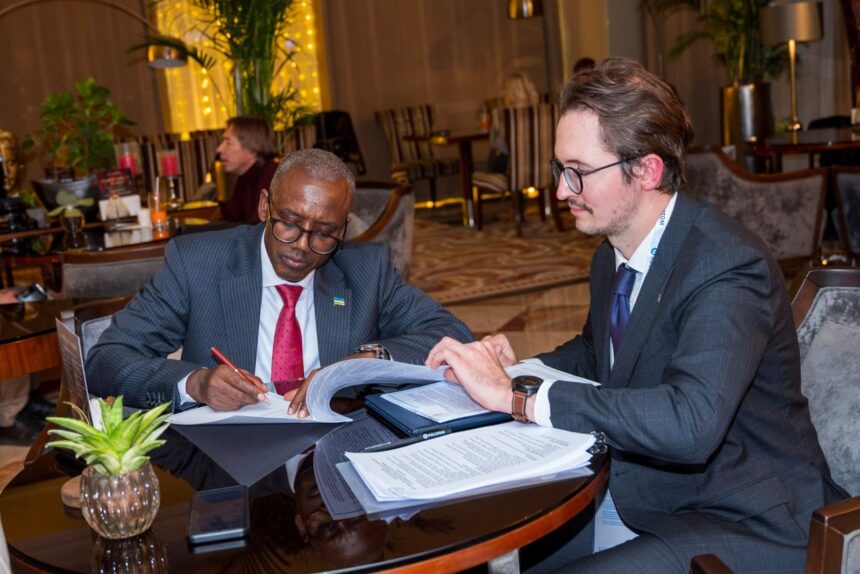
The agreement, announced during the third Russia-Africa Summit in Moscow, was signed by representatives of the Rwanda Atomic Energy Board and Rosatom. It provides a framework for cooperation on nuclear infrastructure, technical training and potential applications of nuclear technology in health care, agriculture and mining.
The Rwanda Atomic Energy Board said the partnership would support the country’s long-term development ambitions under its second National Strategy for Transformation, known as NST2, and Vision 2050.
“Clean nuclear energy, creation of Centre for Nuclear Science and Technology, Training of Nuclear Scientists and Technical Personnel remain one of the foundational areas of cooperation between Rwanda and Russian Federation,” a Rwandan official said in a statement posted on X.
The official said construction work was expected to begin soon, although no specific timeline, project cost or proposed reactor capacity was disclosed.
Rwanda targets electricity generation and scientific development
The proposed small modular reactors, or SMRs, are designed to generate electricity using smaller units than conventional nuclear power stations. They are being promoted as an option for countries seeking reliable, low-carbon power without immediately investing in large nuclear facilities.
Rwanda hopes nuclear technology will eventually contribute to affordable electricity supplies, industrial development and greater energy security.
The planned Center for Nuclear Science and Technology would also support research and training in nuclear applications beyond electricity generation.
These include cancer diagnosis and treatment, food preservation, agricultural research, geological surveys and mineral processing.
According to the Rwandan official, the technologies could bring direct benefits to households and industries while creating employment opportunities for young people.
The agreement also provides for training Rwandan scientists, engineers and technical personnel to support the development and operation of nuclear facilities.
Rosatom pledges technical support
Rosatom said the memorandum of understanding would support Rwanda’s development of nuclear infrastructure in accordance with standards established by the International Atomic Energy Agency.
The cooperation will focus on small modular nuclear power plants, the establishment of a nuclear science and technology center and the development of a skilled national workforce.
Rosatom Director General Alexey Likhachev has identified Africa as a potentially significant market for nuclear technology, citing growing electricity demand and limited access to reliable power across the continent.
Speaking to Sputnik Africa during the summit, Likhachev said hundreds of nuclear power plants would be needed to meet Africa’s long-term energy requirements.
He said approximately 660 million people across the continent lacked access to electricity, highlighting the scale of the infrastructure challenge.
Rosatom is promoting several nuclear technologies for African markets, including floating nuclear power plants, small modular reactors and conventional large-scale facilities.
Nuclear cooperation comes with financial and regulatory challenges
Rwanda has pursued nuclear cooperation with Russia for several years as part of efforts to diversify its energy sources and develop scientific capabilities.
The two countries previously signed agreements covering the peaceful use of nuclear energy, including plans for a nuclear science and technology center.
However, developing a nuclear power industry requires substantial investment, an independent regulatory framework, trained personnel, radioactive waste management systems and comprehensive safety arrangements.
Small modular reactors have attracted international interest because of their potential for phased deployment, but many commercial designs remain under development, and their economic competitiveness has yet to be demonstrated at scale.
The latest agreement does not establish that reactor construction has been fully financed, licensed or approved by Rwanda’s nuclear regulators.
For Rwanda, the partnership represents another step toward exploring nuclear power as part of its longer-term energy strategy.
For Russia, the agreement expands Rosatom’s engagement with African countries seeking nuclear technology, technical assistance and electricity generation infrastructure.
SUPPORT AFRICAN BUSINESS JOURNALISM
Help XOL Africa expand independent business reporting across Africa.
SUPPORT XOL AFRICA →