



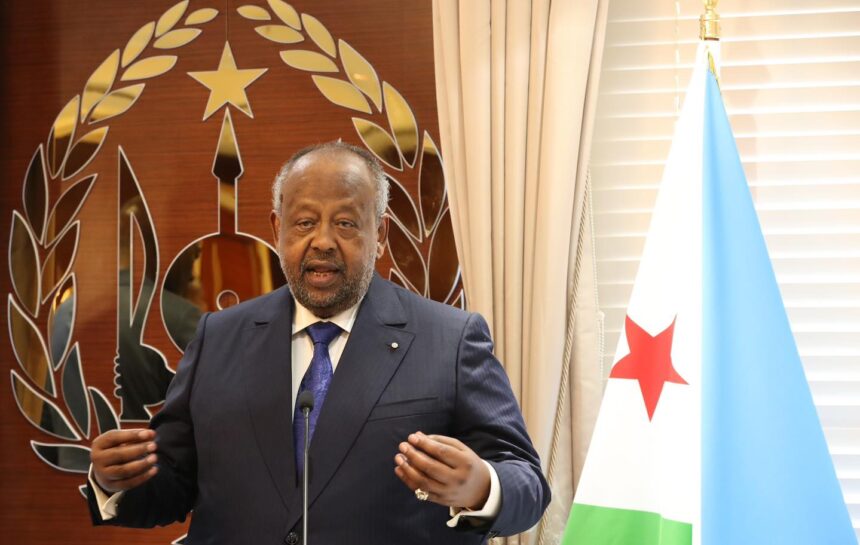
BRUSSELS, Sept. 22, 2026 (XOL Africa) — The European Union has doubled its financial support for the Djibouti Armed Forces to €20 million, citing the country’s strategic role in maritime security and growing security concerns around the Red Sea.
The EU Council said Tuesday it had approved an increase in funding under an existing assistance measure established through the European Peace Facility in 2025. The financial reference amount will rise from €10 million to €20 million.
The EU said the additional support reflects a strengthening of its security and defence partnership with Djibouti and is intended to support the country’s efforts to improve maritime security in the region.
The move comes as the EU seeks to strengthen its response to deteriorating security conditions around the Red Sea and protect freedom of navigation along a major international shipping corridor.
The funding will focus on improving the operational readiness of the Djiboutian Navy, including the development and maintenance of military assets, greater maritime domain awareness and an enhanced naval presence at sea.
The Council said the objectives of the original assistance measure remain unchanged.
The EU’s decision is particularly significant for Djibouti, which sits near the Bab el-Mandeb Strait, a strategic maritime chokepoint linking the Red Sea with the Gulf of Aden and the wider Indian Ocean.
The European Peace Facility was established in March 2021 as an off-budget EU instrument designed to finance actions under the bloc’s common foreign and security policy. It can provide assistance to third countries and regional or international organisations for military and defence-related purposes.
The Council adopted its first European Peace Facility assistance measure for the Djibouti Armed Forces in July 2025.
The EU said implementation of that programme is already underway and that the additional funding will allow it to expand assistance aimed at strengthening Djibouti’s maritime security capabilities.
Djibouti has become an important security hub because of its location at the entrance to the Red Sea, where international naval forces and foreign military bases operate alongside one of the world’s busiest maritime trade routes.
The EU said the increased support forms part of its broader efforts to safeguard maritime security and freedom of navigation as instability around the Red Sea continues to affect the wider region.
SUPPORT AFRICAN BUSINESS JOURNALISM
Help XOL Africa expand independent business reporting across Africa.
SUPPORT XOL AFRICA →