


WENZHOU, China, November 10, 2026 — China, Europe and Africa are seeking to strengthen cooperation on renewable energy investment, technology transfer and green financing as the three regions explore ways to accelerate the global energy transition and expand electricity access across Africa.
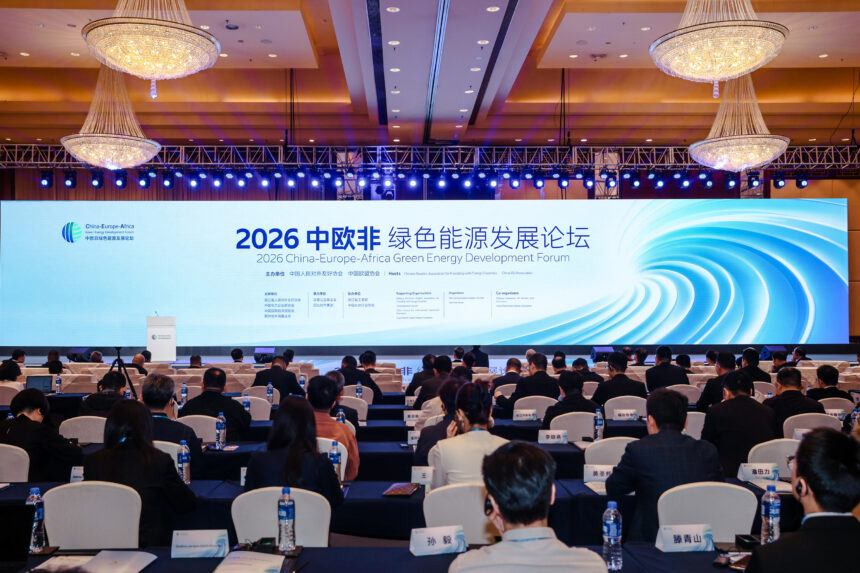
The discussions took place at the 2026 China-Europe-Africa Green Energy Development Forum in Zhejiang province, where participants examined opportunities to deepen industrial partnerships, strengthen clean energy supply chains and mobilise financing for sustainable infrastructure.
According to a statement released on Monday by Chinese energy group CHINT, the forum was organised by the Chinese People’s Association for Friendship with Foreign Countries (CPAFFC) and the China-EU Association, with the CHINT Public Welfare Foundation and StarTimes Group serving as co-organisers.
Held under the theme “Deepening Green Partnerships, Building a Shared Carbon-Free Future”, the gathering brought together participants to examine how the three regions could combine their respective industrial, technological and natural resource advantages to advance renewable energy development.
The discussions come as African economies face mounting pressure to expand electricity generation, attract infrastructure investment and reduce dependence on fossil fuels while meeting rising energy demand.
Green financing and industrial cooperation
A central focus of the forum was the development of innovative financing mechanisms to support renewable energy projects in developing countries, particularly those facing difficulties accessing affordable long-term capital.
Participants examined opportunities for cross-regional industrial cooperation, technological innovation, digital transformation and the development of integrated green value chains.
They also highlighted the importance of harmonising technical standards, certification systems and carbon markets to facilitate investment and improve cooperation between energy companies operating across different regulatory environments.
Such measures could help reduce barriers to renewable energy deployment in Africa, where financing constraints, inadequate transmission infrastructure and regulatory uncertainty continue to limit investment in electricity generation and distribution.
The forum identified small-scale solar installations, ecological restoration and stronger international partnerships as important areas for expanding energy access and supporting sustainable economic development.
For African countries, greater access to affordable solar technology and energy storage systems could help address persistent electricity shortages, particularly in rural communities and areas underserved by national power grids.
Africa’s resources meet Chinese manufacturing and European expertise
The discussions highlighted the potential for cooperation built around China’s established renewable energy manufacturing capabilities, Africa’s abundant energy resources and Europe’s technological expertise and market experience.
China has developed extensive industrial capacity in solar panels, batteries and other clean energy technologies, while European companies and financial institutions have experience in renewable energy project development, regulation and sustainable financing.
Africa, meanwhile, offers substantial solar and wind energy potential alongside mineral resources essential to the production of batteries and other clean energy equipment.
Combining these advantages could create opportunities for investment in renewable energy infrastructure, local manufacturing, technology transfer and regional electricity markets.
However, translating such cooperation into lasting economic benefits for African economies would require greater participation by local companies, workforce development and investment in domestic industrial capacity.
The extent to which partnerships support African manufacturing and value addition, rather than primarily expanding imports of finished equipment, will be an important consideration for policymakers seeking to maximise the economic benefits of the energy transition.
CHINT expands clean energy solutions in Africa
CHINT, a Chinese provider of electrical equipment and integrated energy solutions, said it has developed smart manufacturing facilities and implemented solar power and energy storage projects in international markets.
In Africa, the company said its affordable solar solutions are helping provide electricity to remote communities without grid connections or with unreliable electricity supplies.
The company has positioned distributed solar generation and energy storage as practical options for improving electricity reliability in areas where extending conventional power networks is difficult or commercially unattractive.
These technologies could also support small businesses, agricultural processing, healthcare facilities and other economic activities that depend on stable electricity supplies.
CHINT did not disclose new investment commitments, project financing agreements or specific commercial deals arising from the forum.
Turning climate ambitions into investment
Participants emphasised that stronger cooperation between China, Europe and Africa could help address climate challenges while supporting economic stability and extending the benefits of green development to more communities.
The forum also served as a platform for business exchanges and potential partnerships between companies and institutions involved in renewable energy development.
For African governments, the economic significance of such initiatives will depend on whether discussions translate into bankable projects, affordable financing and greater local participation in clean energy supply chains.
As competition intensifies over the technologies, minerals and infrastructure underpinning the global energy transition, Africa’s role as both a potential renewable energy producer and a growing market for clean energy solutions is attracting increasing international attention.
The challenge for the continent will be to convert that interest into sustained investment, expanded electricity access and stronger domestic industries.
The Zhejiang forum reflects efforts to build a broader framework for cooperation between the three regions, although the commercial impact of the discussions remains to be seen.
SUPPORT AFRICAN BUSINESS JOURNALISM
Help XOL Africa expand independent business reporting across Africa.
SUPPORT XOL AFRICA →