


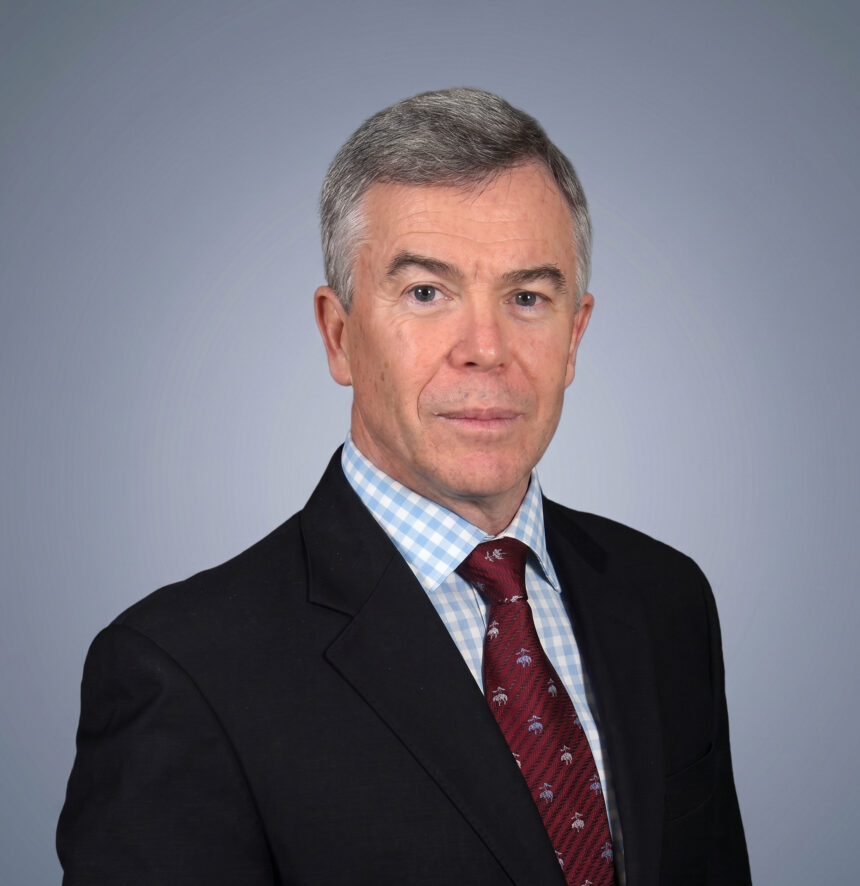
AUSTIN, Texas, November 10, 2026 — SAGINT, a US-based data infrastructure company specialising in supply chain verification, has appointed retired General Bryan P. Fenton, former commander of US Special Operations Command, to its board of advisers as Washington prepares to tighten restrictions on the sourcing of critical minerals used in military equipment.
In a statement released on Monday, November 9, SAGINT said Fenton would advise the company on critical minerals supply chain security, defence industrial base resilience and organisational development as it expands into new markets.
The appointment comes ahead of a January 1, 2027, deadline when US defence acquisition restrictions are set to expand, requiring contractors to demonstrate that certain magnets and critical minerals have not originated from China, Russia, Iran or North Korea.
The changes are expected to increase pressure on defence manufacturers to establish reliable records tracing materials through mining, refining, processing and manufacturing.
For companies supplying the Pentagon, the ability to verify the origin of raw materials is becoming an increasingly important component of regulatory compliance and supply chain risk management.
Fenton, who retired after 38 years in the US Army, previously commanded special operations forces in the Pacific and led Joint Special Operations Command. He also served as senior military assistant to two US defence secretaries.
His final military appointment was as the 13th commander of US Special Operations Command, overseeing approximately 70,000 personnel across the armed services.
SAGINT said his experience managing complex military operations and multinational teams would support its efforts to strengthen its management capabilities while expanding its commercial operations.
Supply chain verification becomes a strategic priority
The tightening of US procurement requirements reflects growing concerns over the concentration of critical minerals processing and production in a limited number of countries, particularly China.
Rare earth elements and specialised magnets are essential components in advanced military systems, including aircraft, precision-guided weapons, radar equipment and communications technologies.
According to SAGINT, Executive Order 14415, signed in July 2026, also calls for defence contractors to provide detailed bills of materials tracing components to their raw material origins.
The company is positioning its digital verification infrastructure as a means of helping manufacturers, suppliers and government agencies meet increasingly demanding traceability requirements.
Its system generates a Digital Warehouse Receipt for each material lot using production data supplied by the producer. The record is subsequently verified at each transfer, allowing authorised participants to establish material provenance and chain of custody while protecting commercially sensitive information.
The company said the technology has been deployed with physical materials since January 2026, initially through its work with ReElement Technologies.
Expansion into Africa and emerging markets
SAGINT’s international expansion could also have implications for African mineral producers seeking greater access to Western defence and industrial supply chains.
On October 27, the company announced an agreement appointing ADI Foundation as its exclusive channel participant, bringing its Digital Warehouse Receipt system to ADI Chain and extending its network into Africa, the Middle East and Southeast Asia.
The expansion comes as African governments seek to capture more value from mineral resources and strengthen their participation in global manufacturing supply chains.
Africa holds significant deposits of minerals used in batteries, electronics and defence technologies, including cobalt, copper, graphite and rare earth elements.
However, access to high-value international markets increasingly depends not only on resource availability but also on the ability to demonstrate origin, regulatory compliance and transparent supply chain practices.
Digital traceability systems could provide an additional route for qualifying African producers to establish verifiable supply records, although their effectiveness will depend on adoption, independent verification and acceptance by international buyers.
For SAGINT, expanding into mineral-producing regions offers an opportunity to establish its verification infrastructure closer to the beginning of global supply chains.
Defence and intelligence expertise
Fenton joins an advisory board that includes Maura Burns, former chief operating officer of the Central Intelligence Agency. The company also works with retired US ambassador Troy Fitrell, chief executive of SAGINT International.
Jacob Clayton, SAGINT’s chief executive, said Fenton’s experience would help the company address the operational challenges associated with securing strategic supply chains.
“Governments and the companies that supply them need proof they can act on,” Clayton said.
He added that Fenton understood the consequences of supply chain uncertainty and would help the company build a team capable of responding to rapidly changing market requirements.
Fenton said accountability for the materials used in military equipment was essential to operational readiness.
“Everything our forces field depends on material someone can account for, from the mine to the moment it reaches them,” he said.
The appointment underscores the growing intersection of national security, industrial policy and digital infrastructure as governments seek greater oversight of strategic materials.
For African mining economies, the shift presents both an opportunity and a challenge: stronger verification systems could improve access to international markets, but increasingly stringent sourcing requirements may also raise compliance costs for producers and exporters.
SAGINT said Fenton’s appointment is in a personal advisory capacity and does not constitute an endorsement by the US government or its agencies.
SUPPORT AFRICAN BUSINESS JOURNALISM
Help XOL Africa expand independent business reporting across Africa.
SUPPORT XOL AFRICA →