


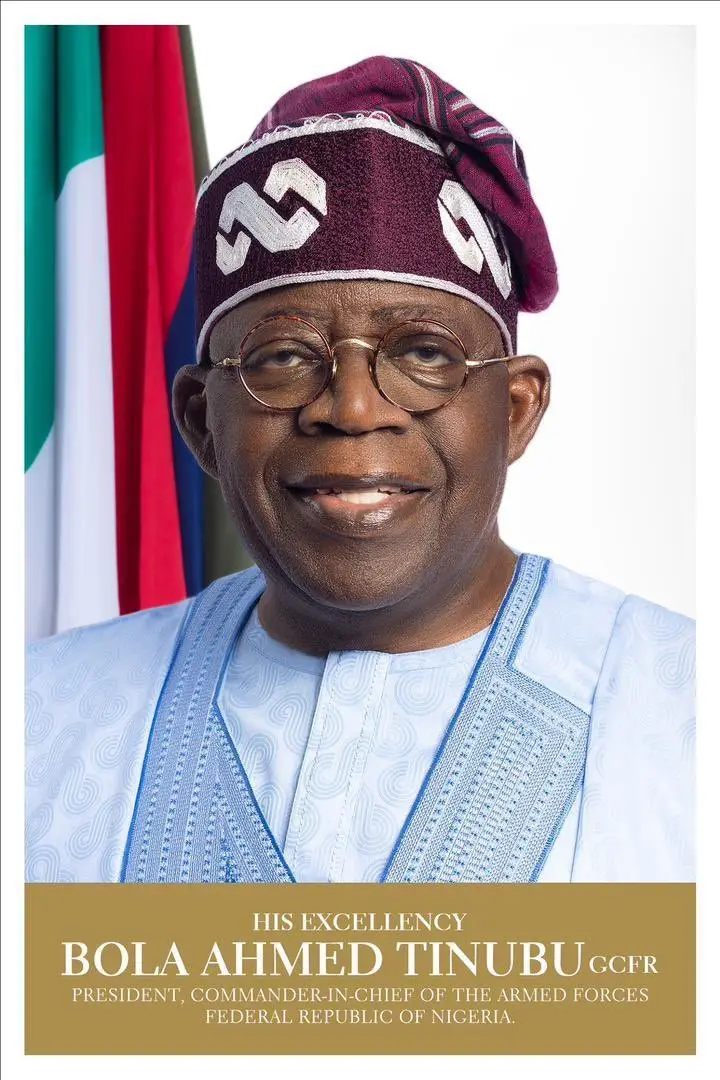
Nigeria’s president Bola Tinubu has defended his administration’s economic reforms, citing a rise in foreign exchange reserves to $55bn and record non-oil exports as evidence of progress towards building a $1tn economy by 2030.
Tinubu said non-oil activities now accounted for about 96 per cent of Nigeria’s gross domestic product, underscoring the growing contribution of agriculture, manufacturing, services and technology to Africa’s most populous economy.
Speaking through Tajudeen Abbas, speaker of the House of Representatives, at a book presentation in Abuja on Thursday, the president said Nigeria was moving from economic stabilisation towards what he described as shared prosperity.
He claimed the country’s external reserves had climbed to approximately $55bn, equivalent to more than 14 months of import cover, while non-oil exports had surpassed $6bn.
The figures, if confirmed, would represent a significant improvement in Nigeria’s external financial position following years of foreign exchange shortages, currency volatility and pressure on government finances.
However, the dominance of non-oil activities in GDP does not necessarily indicate a corresponding decline in Nigeria’s dependence on petroleum for export earnings and foreign currency receipts.
Reform agenda and fiscal consolidation
Tinubu, who took office in May 2023, inherited an economy facing mounting debt-servicing costs, pressure on the naira and an expensive petrol subsidy system.
His administration subsequently removed the fuel subsidy and introduced changes to the foreign exchange market, seeking to reduce fiscal distortions and attract private investment.
The measures initially contributed to higher living costs and intensified pressure on households and businesses, particularly through rising fuel prices and the depreciation of the naira.
“These were not easy decisions, and I know the weight they placed on every household, but they were necessary, and today the pain is yielding its promise,” Tinubu said.
The president said non-oil government revenue had increased from N13.63tn in 2023 to N16.4tn in the first six months of 2026.
He also highlighted efforts to simplify Nigeria’s tax system, reduce multiple taxation and improve the investment environment.
“We cannot tax our way into prosperity; we must produce our way there,” he said.
Tinubu said the government intended to rely heavily on private capital to achieve its economic ambitions, with a de-risking framework introduced in the 2025 budget designed to attract 86 per cent of the investment required for the 2030 target.
The proposed approach places considerable emphasis on private-sector participation in infrastructure, energy, manufacturing and other productive industries.
Infrastructure and power investment
Electricity generation and transport infrastructure remain central to the administration’s industrialisation strategy.
Tinubu highlighted efforts to revive the long-delayed Mambilla hydroelectric project, citing Nigeria’s victory in a $3.38bn arbitration proceeding at the International Chamber of Commerce in Paris.
He also referred to plans to expand Geregu Power’s generating capacity to 1,300 megawatts and revive the Port Harcourt and Warri refineries.
The president identified the Kano-Katsina-Maradi railway, Lagos-Calabar Coastal Highway and Sokoto-Badagry Superhighway as strategic transport projects intended to improve domestic connectivity and facilitate regional trade.
The projects form part of a broader attempt to address infrastructure deficiencies that have constrained Nigeria’s manufacturing competitiveness and increased the cost of moving goods.
Their economic impact will depend on execution, financing and the ability to translate new infrastructure into lower operating costs for businesses.
Agriculture, manufacturing and digital economy
Tinubu said his administration was prioritising agricultural mechanisation, irrigation and livestock development while encouraging greater domestic processing of mineral resources.
The strategy is intended to strengthen local value chains, reduce dependence on imported manufactured goods and expand employment opportunities.
He also pointed to the planned deployment of 90,000 kilometres of fibre-optic infrastructure and the 3 Million Technical Talent programme as key components of Nigeria’s digital economy ambitions.
The government is seeking to develop a larger technology workforce while improving connectivity for businesses and households.
Meanwhile, the Bank of Industry is extending concessional financing and grants to small businesses, artisans, market traders and young entrepreneurs across Nigeria’s 774 local government areas, according to the president.
Housing and education financing
Tinubu also outlined measures to expand access to education and housing finance.
He said the Nigerian Education Loan Fund was supporting access to higher education, while a university solarisation programme aimed to improve electricity supply across tertiary institutions.
More than 10,000 homes were being developed across 14 states and the Federal Capital Territory under the Renewed Hope Cities and Estates Programme, he added.
The Ministry of Finance Incorporated Real Estate Investment Fund had provided approximately N128bn in mortgages to 1,859 families across 25 states, according to figures presented by the president.
Tinubu said his administration would work with the National Assembly to establish a stronger regulatory framework for the housing and real estate sector.
Diversification beyond oil
The remarks came at the launch of Economic Diversification and Structural Transformation in Nigeria: Past, Present and Future, a 555-page book written by Abdulmumin Jibrin, a member of the House of Representatives representing the Kiru/Bebeji constituency in Kano state.
Jibrin argued that Nigeria’s long-term prosperity depended on developing industries beyond petroleum, including agriculture, technology, solid minerals, manufacturing and the creative economy.
“For too long, our nation has leaned heavily on a single economic pillar,” he said.
He added that Nigeria needed to unlock the productive potential of its non-oil sectors to achieve sustainable economic growth.
The event also featured Anambra state governor Charles Soludo, who delivered the keynote address, industrialist Abdulsamad Rabiu and journalist Reuben Abati.
For Nigeria, the challenge is whether the government’s reforms can deliver sustained investment, higher productivity and improved living standards alongside stronger fiscal and external indicators.
Achieving a $1tn economy by 2030 would require substantial growth in dollar-denominated output, alongside greater currency stability and sustained expansion of productive industries.
Tinubu maintained that the administration’s policies were laying the foundations for that transition, with private investment and economic diversification at the centre of its strategy.
SUPPORT AFRICAN BUSINESS JOURNALISM
Help XOL Africa expand independent business reporting across Africa.
SUPPORT XOL AFRICA →