


KAMPALA, Uganda (XOL Africa) — Uganda is seeking to expand tourism’s contribution to household incomes and local economic development by increasing investment in infrastructure, digital technology and conservation, President Yoweri Museveni said Monday.
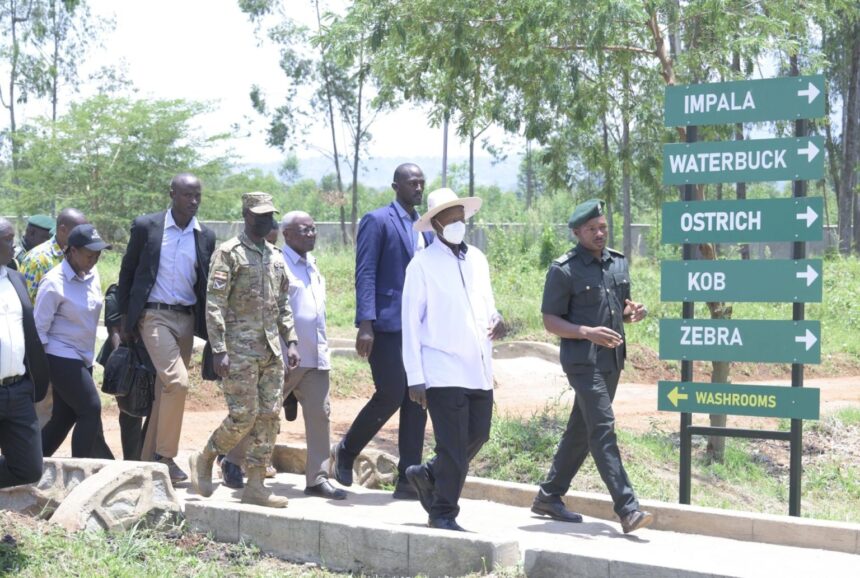
Museveni made the remarks during Uganda’s World Tourism Day 2026 celebrations in Mbale, where he commissioned the Mbale Wildlife Conservation Education Centre, commonly known as Mbale Zoo.
The facility, established by the Uganda Wildlife Authority, is intended to promote wildlife conservation education and tourism in the Elgon subregion.
Museveni described tourism as a major service industry with potential to generate income across a wide range of businesses, including accommodation, transport, food, entertainment, tour guiding and cultural enterprises.
He urged Ugandans to position themselves to capture a larger share of the global tourism market, particularly through businesses serving visitors and communities around tourism destinations.
The president contrasted tourism with Uganda’s coffee industry, arguing that tourism generates economic activity across a broader value chain.
“Tourism is one of the lucrative service industries,” Museveni said, urging households with limited land for commercial agriculture to consider opportunities in tourism and other productive sectors.
He also encouraged communities in the Elgon region to participate in Uganda’s broader wealth-creation strategy, which includes commercial agriculture, manufacturing and artisanship, services, and information and communications technology.
Conservation and infrastructure
At the Mbale event, Museveni unveiled a Tourism Conservation Strategy for the Elgon subregion focused on protecting forests and wetlands from encroachment and degradation.
He warned that environmental damage could undermine Uganda’s tourism industry because forests, wetlands and wildlife habitats are central to the country’s natural attractions.
“Wetland encroachers and those involved in deforestation are enemies of Uganda’s tourism development,” Museveni said, according to the statement.
The president also called for continued investment in roads, electricity, water and communications infrastructure connecting tourism destinations to surrounding communities.
He said Uganda had established important foundations for tourism growth, including peace, security and road connectivity, but that last-mile infrastructure remained necessary to make attractions more accessible.
Museveni said communities near tourism sites should be positioned to benefit from increased visitor numbers through businesses and services linked to the tourism value chain.
AI and digital tourism
Tourism Minister Tom Butime said Uganda is increasingly turning to digital technology and artificial intelligence to market destinations and improve the visitor experience.
Butime said technologies including digital booking systems, smart park gates and AI-assisted safari planning could make tourism services more accessible and efficient.
“AI and other smart technologies could transform how Uganda markets and showcases its tourism destinations,” Butime said.
He identified the Elgon subregion as an area with significant tourism potential, pointing to Mount Elgon, scenic landscapes, food, cultural heritage and local hospitality.
However, he said limited investment, restricted access to capital and visa-related challenges remained obstacles to tourism development in the region.
Butime said improvements in infrastructure, financing and accessibility would be important to converting the region’s tourism assets into greater economic activity and employment.
European investment opportunities
Dutch Ambassador to Uganda Angèle Samura said European investors could find opportunities in Uganda’s hospitality and tourism sectors, particularly in skills development, sustainable tourism and digital technology.
Samura said European tourist arrivals to Uganda rose from about 38,000 in 2024 to approximately 150,000 in 2025, according to figures cited in the statement.
She said Uganda’s tourism offering extends beyond wildlife to include natural attractions, wellness, food and culinary experiences and cultural products.
“These products provide opportunities for Uganda to attract more international visitors,” Samura said, while emphasizing the need to strengthen the wider tourism ecosystem so that rising visitor numbers generate greater benefits for businesses and communities.
Mbale City Mayor Joyce Matuka Kidulu said digital tourism could increase the visibility of attractions in Mbale and the wider Bugisu region, helping connect the area with domestic and international visitors.
She also highlighted planned developments including a proposed Regional University of Science and Technology and a stadium, which she said could support economic and tourism growth.
The World Tourism Day celebrations brought together government officials, tourism operators, local and cultural leaders, development partners and other stakeholders to discuss investment, technology and innovation in Uganda’s tourism industry.
SUPPORT AFRICAN BUSINESS JOURNALISM
Help XOL Africa expand independent business reporting across Africa.
SUPPORT XOL AFRICA →