



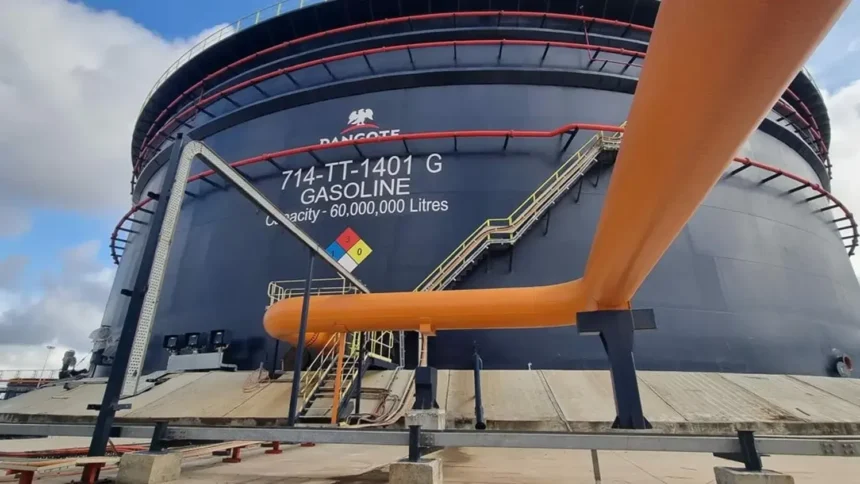
LAGOS, Nigeria (XOL Africa) — Nigeria’s Dangote Petroleum Refinery has raised $2.5 billion through a private placement ahead of its planned initial public offering, strengthening its financing position as it expands production and targets growth in domestic and international fuel markets.
The successful fundraising was confirmed Friday by the refinery’s executive, Devakumar Edwin, and is expected to support the next phase of expansion at the 650,000-barrel-per-day facility, which began production in 2024.
The refinery, owned by Africa’s richest man Aliko Dangote, has steadily increased output of diesel, jet fuel, naphtha and gasoline, helping reduce Nigeria’s long-standing dependence on imported refined petroleum products.
The private placement comes ahead of a planned public listing later this year, one of the most closely watched transactions in Nigeria’s capital market.
People familiar with the fundraising said last month that the refinery was offering 3 billion ordinary shares at 35 cents per share, with investor demand already exceeding $2 billion before the transaction closed.
Under the terms of the offering, investors were required to purchase a minimum of 1 million shares, valued at $350,000, with additional subscriptions accepted in blocks of 500,000 shares, according to people familiar with the deal.
The shares will be subject to a 365-day lock-up period, preventing investors from selling their holdings during the first year after the placement.
The fundraising is expected to strengthen the refinery’s balance sheet as it continues to increase production capacity and expand sales across Nigeria and export markets in Africa and beyond.
Since commencing operations in 2024, the Dangote refinery has emerged as a key player in Nigeria’s downstream petroleum sector, supplying refined products to the domestic market while increasing exports to regional and international customers.
The facility, with a nameplate capacity of 650,000 barrels per day, is designed to be the largest single-train refinery in Africa and one of the largest in the world. Analysts say its continued expansion could reshape fuel trade flows across West Africa by reducing the region’s reliance on imported petroleum products.