



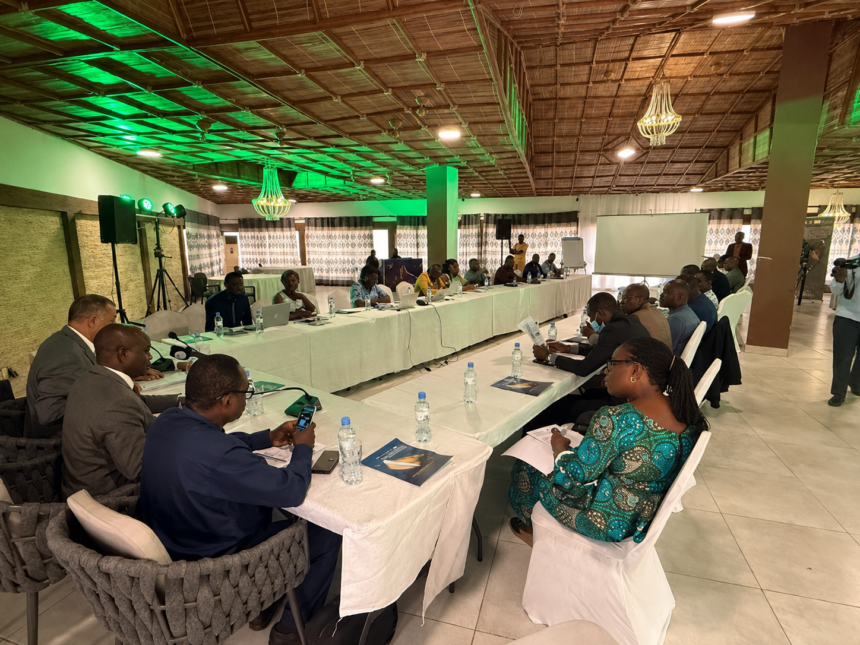
LOMÉ, Togo (XOL Africa) — Togo has brought together government officials, fisheries and aquaculture organizations, researchers, private-sector representatives and development partners to validate recommendations aimed at reforming the country’s fisheries and aquaculture sector, with investment, climate resilience and the livelihoods of fishing communities at stake.
The national consultation and validation workshop, convened by the Togolese government in partnership with the African Union Inter-African Bureau for Animal Resources, or AU-IBAR, is being held under the second phase of the Fisheries Governance Project, known as FishGov2, which is supported financially by the European Union.
Fisheries and aquaculture play an important role in food security, nutrition, employment and livelihoods in Togo, including among communities along the country’s coast and inland waterways. Participants in the Lomé meeting are reviewing existing policies, investment plans and legislative frameworks and assessing their alignment with the African Union’s Policy Framework and Reform Strategy for Fisheries and Aquaculture in Africa.
“Fisheries and aquaculture are essential to food security, nutrition, employment and the livelihoods of many communities in Togo,” said Dr. Lombo Yad, a technical adviser representing the Togolese government.
“This consultation provides an important opportunity to identify policy gaps, strengthen coordination and agree on practical reforms that respond to our national priorities,” Yad said.
The government official also stressed the need to ensure that the recommendations emerging from the process lead to concrete action.
“The success of this process will depend on our ability to move from consultation to action,” Yad said.
The review is examining the extent to which Togo’s national policies and legal frameworks reflect continental commitments on sustainable fisheries management, responsible aquaculture development, regional cooperation, trade, institutional strengthening and the contribution of aquatic resources to food security and economic growth.
Rafik Nouaili, speaking on behalf of AU-IBAR Director Dr. Huyam Salih, said the process should go beyond reviewing policy documents and focus on implementation, investment and coordination.
“This workshop represents a strategic step in the implementation of FishGov2 and reflects our collective commitment to advancing sustainable, inclusive and climate-resilient governance of fisheries and aquaculture in Togo and across Africa,” Nouaili said.
“Together, we must ensure that fisheries and aquaculture become pillars of economic transformation, resilient food systems and the protection of aquatic ecosystems,” he said. “This requires policies that are coherent, institutions that work together and recommendations that are realistic and implementable.”
Participants are also examining the place of fisheries and aquaculture in national agricultural investment planning. The sector, despite its contribution to food security, employment and rural development, has often received limited attention in broader investment frameworks.
Stakeholders are considering ways to integrate fisheries and aquaculture more effectively into national food-system strategies, climate-resilience programs and public and private investment plans. Such integration could help mobilize funding for fisheries infrastructure, aquaculture production, value chains, research, data systems, ecosystem protection and community resilience.
Climate change and environmental degradation are also central concerns. Changing climatic conditions, declining aquatic habitats and pressure on fish stocks are affecting production, breeding and nursery areas and the livelihoods of small-scale fishing communities.
The workshop is therefore seeking to strengthen the integration of fisheries and aquaculture into national agricultural, environmental and climate-adaptation policies.
The recommendations are expected to include measures to improve Togo’s fisheries and aquaculture policies, align national frameworks more closely with continental and international commitments, strengthen climate-change adaptation and environmental management, improve the sector’s inclusion in national investment plans and enhance coordination among government institutions and other stakeholders.
The meeting is also expected to give Togo clearer national ownership of the proposed reforms, according to AU-IBAR.
“We share a common responsibility to accelerate the reforms required to secure the future of our aquatic resources,” Nouaili said. “Through cooperation and a strong commitment to implementation, we can build a fisheries and aquaculture sector that is more resilient, equitable and prosperous for present and future generations.”
The workshop forms part of the broader FishGov2 effort to support implementation of the African Union’s fisheries and aquaculture reform framework at national, regional and continental levels.
For Togo, the process is aimed at positioning fisheries and aquaculture as stronger contributors to food security, livelihoods, climate resilience and sustainable economic development.
SUPPORT AFRICAN BUSINESS JOURNALISM
Help XOL Africa expand independent business reporting across Africa.
SUPPORT XOL AFRICA →