


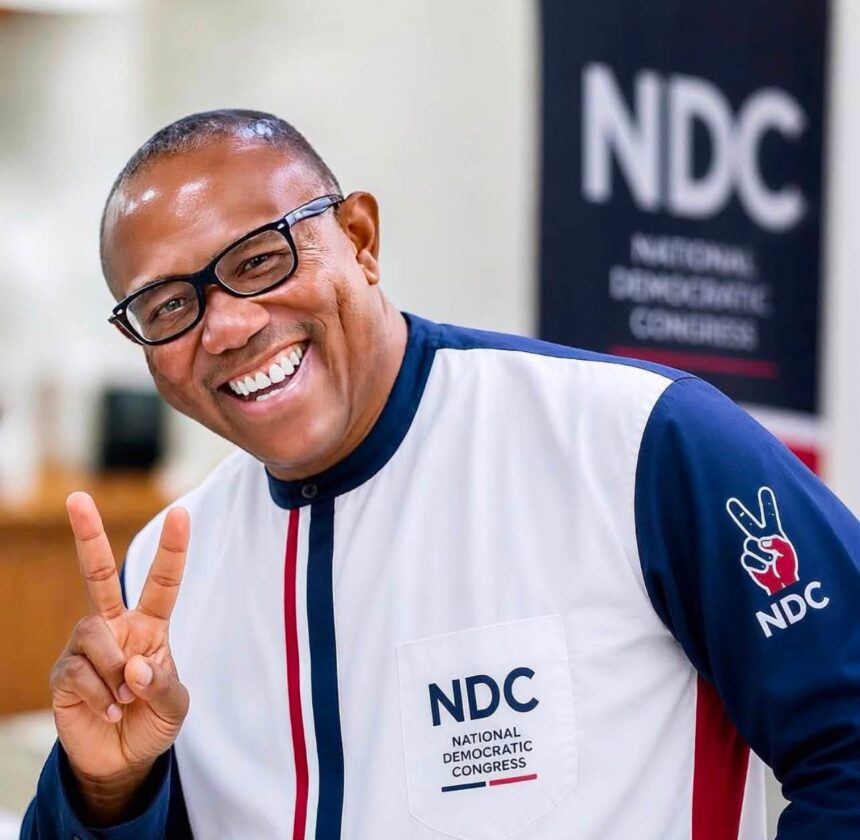
The presidential candidate of the Nigeria Democratic Congress (NDC) for the 2027 general election, Peter Obi, has criticised President Bola Tinubu economic model, noting that large chunk of government revenue is being used to service debt interest payment on outstanding loan of the government.
Obi further observed that improvements in some macroeconomic indicators which is being celebrated by the government have not translated into better living conditions for Nigerians.
In a statement issued on Monday, October 12, in reaction to a recent World Bank report,Obi said the Federal Government should not interpret improvements in economic growth and revenue generation as evidence that the standard of living of Nigerians was improving.
He stressed that the true measures of economic development were declining poverty, job creation, reduced inequality and improved access to essential services.
According to the Presidential candidate, economic stability cannot be established merely by increased government revenue, stronger foreign reserves or growth in Gross Domestic Product (GDP), but must be reflected in citizens’ ability to afford food, access healthcare, educate their children and live with dignity.
“What comfort does higher revenue offer a mother who cannot provide her children with a nutritious meal?” Obi asked, questioning the practical benefits of the government’s economic reforms to households struggling with rising living costs.
Citing the World Bank report titled “Beyond the Federal Purse: How Higher Revenues Reshaped State Priorities”, Obi drew attention to the reported ₦7.7 trillion spent on debt interest payments by the Federal Government in the first half of 2026, compared with revenue of ₦6.2 trillion during the same period.
He noted that interest payments exceeded total revenue by approximately ₦1.5 trillion, questioning why the country’s debt burden remained unsustainable despite the substantial increase in government revenue since 2023.
Obi also expressed concern over the reported reduction of about ₦700 billion in capital expenditure in the first half of the year, despite increased borrowing and revenue.
According to him, the government’s reported spending pattern, in which interest payments were approximately 11 times capital expenditure, raised serious questions about its borrowing strategy and spending priorities.
Obi attributed the situation to what he described as reckless borrowing, corruption and incompetence on the part of the Tinubu administration.
He further argued that the presentation of favourable economic statistics could not substitute for an honest assessment of the effects of government policies on the welfare of citizens.
Citing a recent United Nations Development Programme (UNDP) report, Obi said about 140 million Nigerians were classified as multidimensionally poor, adding that Nigeria was among the countries where previous gains in poverty reduction had been reversed.
He maintained that reforms requiring substantial sacrifices from citizens must produce visible, measurable and widely shared benefits, particularly for the poorest and most vulnerable.
“I have consistently argued that reforms should be evaluated according to their consequences for the people, particularly the poorest and most vulnerable,” he said, insisting that citizens should not be expected to celebrate economic statistics while struggling to meet their basic needs.
Obi called on the Federal Government to review its economic reforms and redirect its attention towards improving the welfare of Nigerians rather than celebrating indicators that, in his view, did not adequately reflect the realities of ordinary households.
He said the ultimate test of economic success was whether Nigerians were eating better, living better and escaping poverty.
“Nigeria deserves an economy that serves its citizens, not one that continually sacrifices citizens’ wellbeing for ‘macroeconomic stability’,” he said, advocating an economic system capable of reducing mass poverty and inequality while creating sufficient employment opportunities for young people.
SUPPORT AFRICAN BUSINESS JOURNALISM
Help XOL Africa expand independent business reporting across Africa.
SUPPORT XOL AFRICA →