


African climate negotiators have accused countries pushing for an end to fossil fuels of pursuing petroleum supply agreements behind the scenes, exposing tensions over energy security, climate finance and the economic costs of the global energy transition.
The African Group of Negotiators on Climate Change has challenged governments advocating a complete phase-out of fossil fuels to reconcile their climate commitments with their energy procurement policies, warning that inconsistent positions risk undermining confidence in international negotiations.
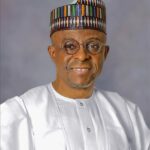
Nana Dr Antwi-Boasiako Amoah, chair of the African Group of Negotiators, raised the concerns on Thursday at the COP31 United Nations climate summit in Antalya, Türkiye, as delegates sought agreement on fossil fuels, adaptation financing and the pace of the transition to cleaner energy.
His intervention followed reports of a trilateral declaration involving China, the United States and Russia, which reportedly included discussions on petroleum supplies, nuclear risks and reforms of the United Nations.
The reported petroleum arrangements were linked to efforts to safeguard refined fuel supplies amid market pressures associated with the conflict involving Iran and disruptions around the Strait of Hormuz, a critical shipping route for global energy markets.
Wopke Hoekstra, the European Union’s climate chief, criticised the reported arrangement, describing it as unfortunate and arguing that greater investment in domestic clean energy would help countries reduce their exposure to future supply disruptions.
Although Amoah said he had no direct knowledge of the reported agreement, he questioned the consistency of governments seeking to eliminate fossil fuels while maintaining arrangements to secure petroleum supplies.
“This is the hypocrisy in the whole process,” he said. “At one point, you see some countries talking about taking fossil out completely, and [behind the scenes] making deals to get fossil [fuels] in their pipelines.”
He urged governments to demonstrate greater transparency and consistency in their energy policies.
“If fossil fuels are something that we want to do away with as parties, let’s be honest to our commitments,” he said, criticising what he described as backdoor arrangements that contradicted public climate pledges.
The dispute highlights a longstanding divide between developed and developing economies over how quickly fossil fuels should be phased out and who should bear the financial and economic costs of the transition.
For African economies, many of which face significant electricity shortages, limited industrial capacity and substantial infrastructure financing gaps, the debate carries consequences beyond emissions reduction.
Several African countries are seeking to develop domestic oil and gas resources while expanding renewable energy investment, arguing that the transition must accommodate economic growth, energy access and industrialisation.
Africa puts climate finance and development at centre of negotiations
Beyond the fossil fuel dispute, Amoah identified climate finance, adaptation and the preservation of multilateral cooperation as central priorities for African negotiators.
He said the continent regarded the UN climate framework as an essential platform for ensuring that developing economies could influence decisions with far-reaching implications for their development.
“Our first point of call is the protection of multilateralism,” he said. “Africa feels safe to be under multilateralism because this is the only place that we can function properly as a people.”
He described any attempt to weaken the multilateral negotiating process as a red line for African countries.
The African group also called for stronger financial commitments from developed economies, particularly to help vulnerable countries adapt to rising temperatures, extreme weather and other climate-related disruptions.
Amoah argued that international climate agreements would have limited practical value unless accompanied by adequate resources to implement them.
Climate finance remains one of the most contentious issues in international negotiations, with developing countries pressing for predictable funding that does not compound existing debt burdens.
African governments have repeatedly argued that the continent’s relatively small contribution to historical global greenhouse gas emissions contrasts sharply with its exposure to climate-related economic and environmental risks.
The negotiating group also insisted that climate policies must support domestic industrialisation rather than restrict African economies to supplying raw materials for the global energy transition.
Amoah said any credible transition framework must protect employment, agricultural livelihoods and the ability of African countries to process and utilise their natural resources locally.
“We also came with [the] understanding that this COP would deliver a just and credible transition,” he said. “So any transition that is going to be burdensome to the African continent is rejected.”
His remarks reflect broader African concerns that international climate policies could constrain investment in energy infrastructure and resource-based industries without providing sufficient financing or technological alternatives.
For resource-rich economies, the question is increasingly how to capture more value from critical minerals, petroleum and other natural resources while building competitive industries capable of supporting long-term growth.
Adaptation takes priority as warming risks intensify
The African negotiators also pressed for greater attention to climate adaptation, warning that the consequences of rising global temperatures could be particularly severe across vulnerable parts of the continent.
Amoah said discussions should extend beyond emissions-reduction targets to consider the economic and social consequences of warming, including the possibility of temperatures temporarily exceeding the Paris Agreement’s 1.5C threshold.
He argued that Africa’s geographical vulnerabilities and development constraints required specific consideration in assessing climate risks.
Higher temperatures, changing rainfall patterns and increasingly severe weather events threaten agricultural production, water availability, infrastructure and livelihoods across the continent.
Amoah also warned that greenhouse gases can remain in the atmosphere for decades or centuries, meaning the consequences of current emissions could persist across generations.
The 2015 Paris Agreement commits countries to holding the increase in global average temperatures well below 2C above pre-industrial levels while pursuing efforts to limit warming to 1.5C.
However, disagreements over fossil fuel production, the distribution of climate finance and the responsibilities of developed and developing economies continue to complicate negotiations.
For Africa, the outcome of COP31 will be measured not only by commitments to reduce emissions but also by whether governments secure the financing, policy flexibility and institutional support needed to pursue economic development alongside climate action.
Amoah’s intervention underscored the continent’s position that the global energy transition must be credible and equitable, with the same standards of accountability applied to countries demanding the abandonment of fossil fuels and those being asked to bear the costs.
SUPPORT AFRICAN BUSINESS JOURNALISM
Help XOL Africa expand independent business reporting across Africa.
SUPPORT XOL AFRICA →