



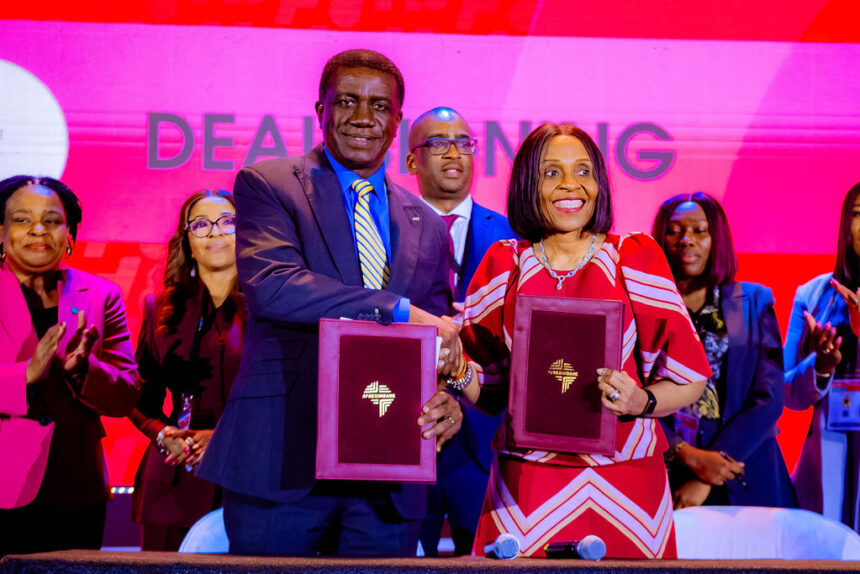
LAGOS, Nigeria (XOL Africa) — The African Export-Import Bank has committed $75 million in financing to the Development Bank of Nigeria to expand access to credit for small and medium-sized businesses, including companies operating in the country’s growing creative industries.
The agreement, announced Wednesday, Nov. 11, will provide financing through the Development Bank of Nigeria’s network of participating financial institutions, supporting businesses seeking working capital, equipment and funding for export-related activities.
In a statement released Wednesday, Afreximbank said the facility would support eligible businesses in fashion, film, music, design and other creative industries, alongside enterprises involved in supply chains and international trade.
The agreement was announced during the Creative Africa Nexus, or CANEX WKND 2026, held in Lagos from Nov. 5-8.
Kanayo Awani, Afreximbank’s executive vice president for intra-African trade and export development, and Tony Okpanachi, managing director and chief executive officer of the Development Bank of Nigeria, led the ceremonial signing.
The financing arrangement is part of Afreximbank’s Export SME Development program, which seeks to help African businesses expand production, improve competitiveness and enter regional and international markets.
Beyond providing loans, the two institutions will establish training and capacity-building programs to help businesses develop export capabilities and improve their access to financing.
Afreximbank will also provide participating businesses with access to its trade platforms, including MANSA, TRADAR, the Pan-African Payment and Settlement System and the African Trade Exchange.
The bank said the initiative would connect Nigerian businesses with potential buyers and commercial partners through programs such as the Africa Buyer Programme and the Intra-African Trade Fair.
“Our partnership with DBN goes beyond providing capital. We are taking an integrated approach that combines finance with capacity building, export-readiness support and access to markets,” Awani said.
She said the objective was to help Nigerian businesses move beyond domestic markets and develop into sustainable exporters.
“For creative enterprises, that advances CANEX’s ambition to turn African talent and ideas into sustainable businesses that can compete internationally,” Awani added.
Okpanachi said the agreement would strengthen the Development Bank of Nigeria’s efforts to address financing constraints facing micro, small and medium-sized enterprises.
“The US$75 million facility will provide much-needed financing through our Participating Financial Institutions, while creating greater opportunities for businesses, particularly those in the creative and export-oriented sectors, to strengthen their productive capacity and access new markets,” he said.
He added that improving the ability of financial institutions to support export-oriented businesses would help Nigerian enterprises participate more effectively in regional and global supply chains.
The partnership comes as African development finance institutions seek to improve access to credit for smaller businesses, many of which face difficulties securing affordable financing to expand operations or enter export markets.
The initiative also reflects growing efforts to commercialize Africa’s creative economy, which includes film, music, fashion and digital content production.
CANEX, Afreximbank’s flagship program for creative and cultural industries, aims to connect African entrepreneurs with financing, investors, commercial partnerships and international markets.
This year’s CANEX WKND was held at the Wole Soyinka Centre for Cultural and Creative Arts in Lagos, bringing together entrepreneurs, investors, buyers and policymakers from Africa, the Caribbean and the diaspora.
The event was organized by Afreximbank, hosted by the Nigerian government and delivered in partnership with the African Union Commission and the secretariat of the African Continental Free Trade Area.
Its activities included investment discussions, intellectual property sessions, export-readiness training and business networking opportunities.
Afreximbank and the Development Bank of Nigeria did not disclose the facility’s interest rates, repayment terms or expected number of beneficiaries.
SUPPORT AFRICAN BUSINESS JOURNALISM
Help XOL Africa expand independent business reporting across Africa.
SUPPORT XOL AFRICA →