



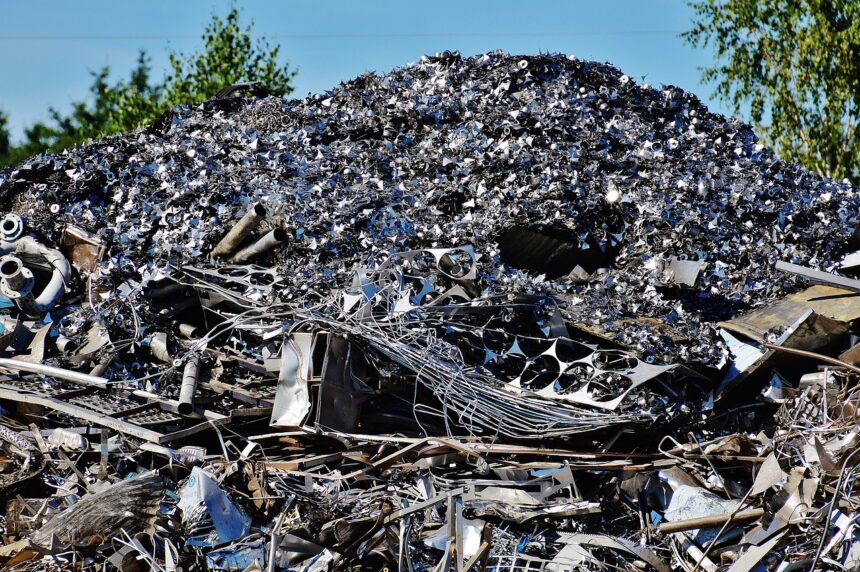
Nigeria is moving to tighten regulation of its scrap metal industry, introducing proposed controls on collection, trading and recycling to curb infrastructure theft, improve traceability and support the development of its domestic steel industry.
The Minister of Steel Development, Shuaibu Audu, announced the initiative during the second phase of stakeholder consultations on the Draft Scrap Metal (Collection, Trading, Recycling and Regulation) Regulations in Kano, according to a statement issued by the ministry’s Head of Press and Public Relations, M.A. Tine-Iulun, on Tuesday.
Audu, represented by Umar Tsoho, Director of the Steel and Non-ferrous Metals Department, said a properly regulated scrap metal value chain was essential to building a competitive steel industry, generating employment and supporting sustainable industrial development.
Under the proposed framework, the government plans to introduce licensing requirements for operators, monitoring of collection centres, transaction-tracking mechanisms and standards covering environmental protection and occupational safety.
The regulations will also target the illegal acquisition and sale of metals taken from public infrastructure, industrial facilities and other protected assets.
Electrical cables, railway components and manhole covers were among the public assets frequently targeted by metal thieves, Audu said, warning that such activities disrupt essential services and increase infrastructure maintenance costs.
The minister said the proposed rules were not intended to undermine legitimate businesses or threaten the livelihoods of scrap metal collectors and traders. Instead, they would provide formalisation arrangements for small-scale operators while imposing appropriate standards on larger recycling and processing facilities.
The regulatory initiative comes as Nigeria seeks to strengthen its domestic industrial capacity and improve the availability of raw materials for steel production. Scrap metal is an important input in steelmaking, making the organisation of its collection, processing and distribution relevant to the wider manufacturing value chain.
Audu said the Kano consultation followed an initial engagement in Lagos on November 9 and 10, where stakeholders examined provisions covering licensing, operator classification, traceability, environmental safeguards and enforcement.
He said recommendations from both consultations would be reviewed and harmonised before the proposed regulations were finalised.
The ministry’s Permanent Secretary, Nura Rimi, represented by Christopher Wange, Director of the Metallurgical Inspectorate and Environmental Protection Department, said the consultations were designed to ensure that the regulatory framework reflected industry realities and addressed stakeholder concerns.
He urged participants to submit practical recommendations on operator classification, security, environmental protection and cooperation among government agencies.
The National Steel Council also expressed support for the proposed framework, describing it as relevant to economic growth and employment generation. Its Acting Executive Secretary, Aminu Shehu, communicated the council’s position through Nana-Firdausi Muhammad, Head of Planning, Research and Statistics.
The Nigeria Security and Civil Defence Corps pledged to work with the ministry and other stakeholders to protect critical national infrastructure.
Kano State Commandant Mohammed Agalama, representing the corps’ Commandant-General, Ahmed Audi, said stronger regulation was necessary to prevent the theft of electrical installations, pipelines and railway facilities.
The proposed rules mark a further attempt by the government to formalise Nigeria’s scrap metal trade, balancing the industry’s role in supplying recyclable materials to manufacturers against the economic and security costs of infrastructure vandalism.
SUPPORT AFRICAN BUSINESS JOURNALISM
Help XOL Africa expand independent business reporting across Africa.
SUPPORT XOL AFRICA →