


DAKAR, November 10, 2026 — Senegal has inaugurated two vocational training centres with a combined annual capacity of 2,640 learners, as the West African country expands investment in technical education to address skills shortages and improve employment opportunities for young people.
The facilities, located in Diourbel and Linguère, were delivered by Swiss-based infrastructure group Mitrelli in partnership with Senegal’s Ministry of Employment and Vocational and Technical Training.
In a statement released on Tuesday, Mitrelli said the centres would provide practical training in agriculture, livestock production, textiles, industrial technology, renewable energy, equipment maintenance and information and communication technologies.
The investment forms part of a broader government programme designed to train at least 30,000 young people annually through modern vocational and technical education facilities.
Senegal is seeking to align its education system more closely with labour market requirements, particularly in sectors considered important for industrialisation, agricultural productivity and economic diversification.
“Learning a trade is a choice for excellence; mastering a skill is giving yourself the means to succeed!” said Idrissa Samb, Senegal’s Minister for Employment and Vocational and Technical Training, during the inauguration ceremonies.
Speaking in Diourbel, Samb emphasised the importance of technical expertise in the country’s development ambitions.
“The Senegal of tomorrow will not be built on speeches and ambitions alone. It will be built on skills, trades, expertise and well-trained men and women,” he said.
“And that Senegal begins here in Diourbel with you.”
Investment targets agriculture and industrial skills
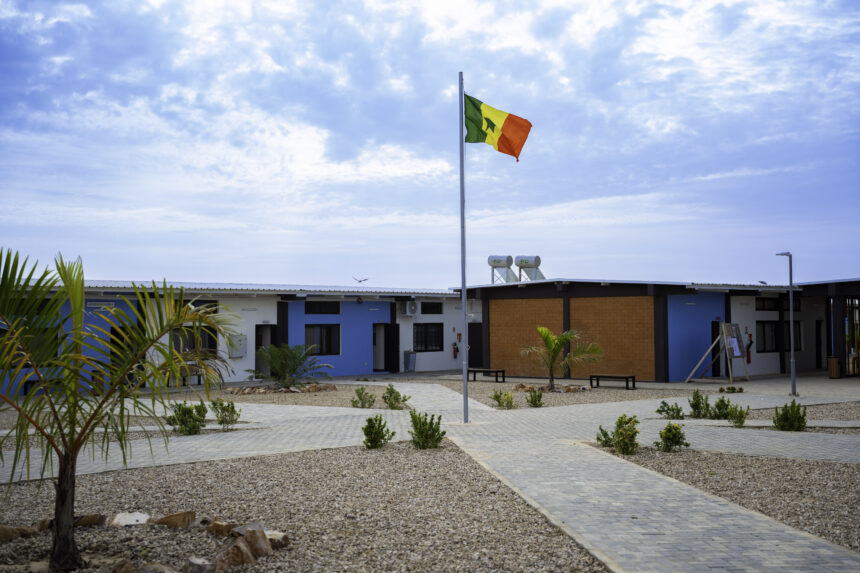
The larger of the two facilities, the Diourbel Vocational Training Centre, has been developed on a 1.3-hectare site with approximately 2,869 square metres of built infrastructure.
Designed to accommodate 1,680 learners annually across two cohorts of 840, the centre will offer training in agriculture and livestock, textiles, industrial activities and digital technologies.
Its facilities include nine conventional classrooms, two ICT classrooms, two laboratories, seven technical workshops and five additional specialised training rooms.
The centre also features greenhouses, livestock facilities and an open-field cultivation area, allowing students to combine classroom instruction with practical agricultural experience.
The emphasis on agricultural training reflects the sector’s importance to Senegal’s economy and the government’s efforts to improve productivity, strengthen food security and encourage local processing of agricultural products.
Expanding technical skills in farming and livestock management could also support the development of small businesses and employment opportunities outside the country’s major urban centres.
Solar energy and digital training in Linguère
The second facility, located in Ouarkhokh in the Linguère department of the Louga region, will focus on renewable energy, equipment maintenance and information technology.
Built on a 7,000-square-metre site, the Linguère Vocational Training Centre comprises approximately 2,055 square metres of infrastructure and has a planned annual capacity of 960 learners across two cohorts.
The facility includes five conventional classrooms, an ICT classroom, two laboratories, seven workshops and a specialised training room.
Its focus on solar technology and maintenance is intended to develop technical capabilities relevant to Senegal’s evolving energy sector.
Training in renewable energy installation, maintenance and associated technologies could help expand the pool of skilled workers available to support electricity infrastructure and decentralised energy projects.
Both centres also include administrative buildings, student common areas, sports facilities, shops, accommodation for visitors, backup generators and water-storage infrastructure.
Linking education investment to employment
The programme reflects a wider effort by African governments to address the mismatch between formal education and the practical skills demanded by employers.
For Senegal, expanding vocational education is particularly important as the country seeks to develop its industrial base, strengthen agricultural value chains and create employment opportunities for its young population.
Technical training in sectors such as manufacturing, digital services and renewable energy could also improve the availability of skilled labour for domestic companies and international investors.
Abdoul Hien, Mitrelli’s country general manager for Côte d’Ivoire and Senegal, said the projects were intended to make practical education more accessible while supporting local economic development.
“These centres connect classroom learning with hands-on experience, equipping young people with skills relevant to their future and local economies,” Hien said.
He added that the projects reflected Mitrelli’s commitment to working with African governments to strengthen education infrastructure and create pathways into employment.
The two centres have been formally delivered to the Senegalese government and are ready to support training activities, although authorities have yet to announce when the first students will enrol.
No financial value for the projects was disclosed in the statement.
While the facilities provide capacity for thousands of learners annually, their contribution to employment will ultimately depend on the quality of training, links with employers and the ability of graduates to secure jobs or establish businesses.
The investment nevertheless represents a further step in Senegal’s efforts to build a workforce equipped for an economy increasingly dependent on technical expertise, digital capabilities and higher-value production.
SUPPORT AFRICAN BUSINESS JOURNALISM
Help XOL Africa expand independent business reporting across Africa.
SUPPORT XOL AFRICA →