


LUSAKA, November 10, 2026 — Zambia is seeking to accelerate preparations for a nuclear power programme as part of efforts to diversify its electricity supply and support long-term economic growth, with ministers calling for closer coordination between government agencies and international partners.
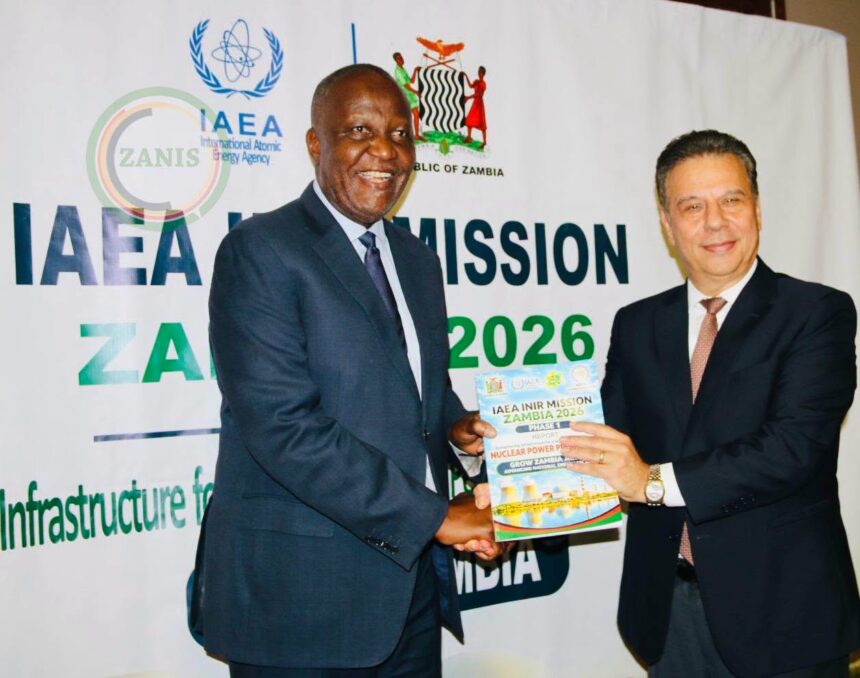
The government outlined its priorities at the conclusion of the first phase of an Integrated Nuclear Infrastructure Review (INIR) mission conducted with the International Atomic Energy Agency (IAEA), which assessed the country’s readiness to develop nuclear energy infrastructure.
In a statement issued on Tuesday, Zambia’s government said Technology and Science Minister Felix Mutati had emphasised the need for sustained investment in technology, natural resources and skilled personnel to advance the country’s nuclear ambitions.
Mutati described the programme as an important component of Zambia’s long-term energy strategy and its broader Grow Zambia Agenda, which seeks to promote industrial development and economic transformation.
The minister called for closer collaboration between the ministries responsible for technology, science and energy, arguing that effective institutional coordination would be essential to implementing the programme.
The initiative comes as Zambia seeks to strengthen electricity security and reduce its exposure to fluctuations in hydropower generation, which remains a major component of the country’s energy mix.
Recurring droughts and changing rainfall patterns have highlighted the vulnerability of hydro-dependent electricity systems in southern Africa, increasing interest in alternative sources of baseload power.
IAEA highlights regulatory and institutional requirements
John Haddad, who led the IAEA review team, urged Zambia to strengthen coordination mechanisms, legal frameworks and regulatory systems before advancing towards nuclear power development.
The recommendations underscore the complexity of establishing a civilian nuclear energy industry, which requires comprehensive safety oversight, specialised technical expertise, long-term financing and institutions capable of managing nuclear infrastructure.
The INIR process is designed to help countries assess their preparedness for nuclear power development against the IAEA’s infrastructure framework.
It covers areas including national policy, nuclear safety, regulatory oversight, human resource development, financing and emergency preparedness.
For Zambia, the review represents an early stage in a potentially lengthy development process rather than approval to begin constructing a nuclear power plant.
Nuclear energy linked to industrial growth
Energy Minister Peter Kapala, in remarks delivered on his behalf by Director of Energy Mafayo Ziba, said the IAEA mission’s recommendations would help determine the government’s next steps in developing the necessary infrastructure.
The proposed programme could eventually provide Zambia with an additional source of electricity to support mining, manufacturing and other energy-intensive industries.
Reliable power supply is particularly important to Zambia’s copper industry, a major contributor to export earnings and economic activity.
However, nuclear power development would require substantial upfront capital investment, long construction timelines and a sustained commitment to regulatory and operational capacity.
The government has not announced a confirmed construction timetable, project cost, reactor technology or financing agreement for a nuclear power plant.
The outcome of the IAEA review is expected to inform further policy and institutional preparations as Zambia evaluates the feasibility of incorporating nuclear energy into its future electricity mix.
Officials emphasised that coordination between ministries, regulatory bodies and technical institutions would be critical to translating the country’s nuclear ambitions into a viable programme.
The initiative reflects Zambia’s efforts to broaden its energy options while addressing the electricity requirements of a growing economy.
For policymakers, the immediate challenge will be to establish the technical, financial and regulatory foundations necessary to determine whether nuclear power can become a commercially viable component of the country’s long-term energy strategy.
SUPPORT AFRICAN BUSINESS JOURNALISM
Help XOL Africa expand independent business reporting across Africa.
SUPPORT XOL AFRICA →