



KAMPALA, November 10, 2026 — Uganda’s shilling has strengthened against the US dollar following renewed foreign investment in government securities, after the central bank tightened monetary conditions to contain currency depreciation and stabilise financial markets.
The Bank of Uganda said offshore investors purchased more than Shs200bn ($49mn) in government debt during a recent securities auction, helping to ease pressure on the local currency after a period of capital outflows.
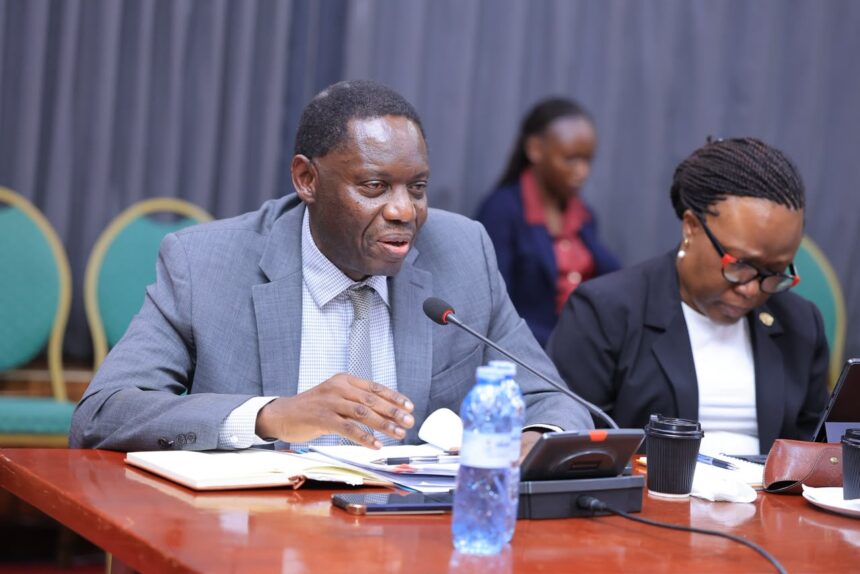
Speaking before parliament’s Committee on Commissions, Statutory Authorities and State Enterprises (COSASE) on Tuesday, central bank governor Michael Atingi-Ego said the shilling had recovered to about Shs4,050 against the dollar from nearly Shs4,500.
The recovery followed a series of monetary policy measures aimed at reducing excess liquidity, supporting demand for shilling-denominated assets and restoring investor confidence.
Atingi-Ego attributed the earlier depreciation partly to tighter US monetary conditions, which had made dollar-denominated investments more attractive to international investors.
The shift prompted some non-resident holders of Ugandan government securities to sell their investments and convert the proceeds into dollars, increasing demand for foreign currency in the domestic market.
“We saw a number of non-residents who are holding Uganda government securities beginning to sell off these securities to buy dollars in the market,” Atingi-Ego told lawmakers.
The resulting pressure pushed the exchange rate close to Shs4,500 per dollar, raising concerns about imported inflation and the cost of essential goods.
Central bank tightens liquidity to defend currency
In response, the Bank of Uganda increased the cash reserve ratio for commercial banks from 11 per cent to 13.5 per cent, withdrawing approximately Shs1.3tn from the banking system.
The central bank also raised its benchmark interest rate by 225 basis points on October 14, from 9.75 per cent to 12 per cent, increasing borrowing costs and making access to central bank liquidity more expensive.
The measures contributed to higher yields on government securities, improving their appeal to foreign investors seeking returns on local-currency debt.
During a subsequent auction in which the government offered Shs1.4tn in securities, offshore investors returned to the market, purchasing more than Shs200bn.
“We saw a return of the offshore players into our market to buy government securities,” Atingi-Ego said, adding that the inflows helped increase dollar supply and support the shilling.
The currency’s appreciation from nearly Shs4,500 to Shs4,050 represents a recovery of about 10 per cent against the dollar, based on the exchange rates cited by the governor.
However, the monetary tightening also highlights the trade-offs facing policymakers, as higher interest rates can increase financing costs for businesses and the government while constraining domestic credit growth.
Structural reforms needed for lasting stability
Atingi-Ego warned that monetary interventions alone would not provide a sustainable solution to Uganda’s currency vulnerabilities.
He urged lawmakers to support the government’s tenfold growth strategy, which seeks to expand productive capacity, increase exports and reduce the economy’s dependence on imported goods.
The strategy identifies agro-industrialisation, tourism, mineral development, science, technology and innovation as priority sectors for economic transformation.
“We need to increase the export of goods and services,” Atingi-Ego said, emphasising the importance of processing raw materials domestically to generate higher export earnings.
Greater value addition could help Uganda earn more foreign exchange from agricultural and mineral exports, potentially reducing pressure on the shilling over the longer term.
The governor’s comments reflect a broader challenge facing several African economies, where exchange-rate stability remains vulnerable to changes in global interest rates, foreign portfolio investment and demand for dollar assets.
Coffee processing emerges as growth priority
Lawmakers also called for greater investment in agricultural processing, particularly in Uganda’s coffee industry, as part of efforts to expand export revenues.
Julius Nakiyi, a legislator representing Budadiri County East, argued that Uganda could substantially increase earnings from coffee without necessarily expanding production volumes if more of the crop were processed locally.
Citing a report attributed to the Uganda Coffee Association, Nakiyi said greater value addition could potentially triple income from existing production levels.
He called for increased government funding for coffee development and processing infrastructure to support growth in the sector.
Uganda is one of Africa’s major coffee producers, but increasing the proportion of exports sold as processed products rather than raw beans remains an important opportunity for capturing more value within the domestic economy.
The discussion comes as Uganda seeks to balance immediate financial stability with longer-term economic diversification.
While renewed foreign demand for government securities has provided temporary relief for the shilling, the central bank’s assessment suggests that sustained currency stability will depend increasingly on export competitiveness, domestic production and the country’s ability to attract more durable sources of foreign exchange.
SUPPORT AFRICAN BUSINESS JOURNALISM
Help XOL Africa expand independent business reporting across Africa.
SUPPORT XOL AFRICA →